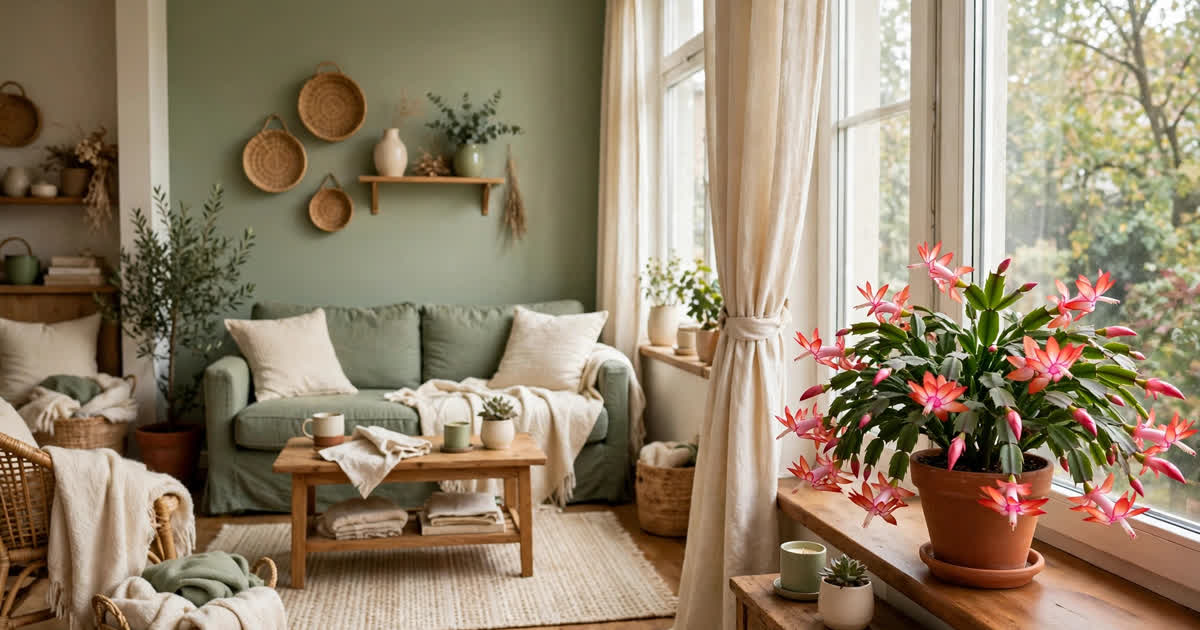
A Christmas cactus that refuses to bloom is one of the most frustrating houseplants there is, because the plant looks perfectly healthy — green, plump, growing new segments — and then December arrives and nothing happens. The reason is almost always one of a short list of mistakes, and most of them are the opposite of what you would expect: too much light, too much water, too much warmth, or too much attention at exactly the wrong moment.
Christmas cactus (Schlumbergera) is not a desert cactus at all. It comes from the shaded, humid forests of Brazil, where it grows on trees, and it blooms in response to two triggers: shorter days and cooler nights. Get those two triggers right, and avoid the mistakes below, and a plant that has sulked for years will often bloom the very next season.
1. Giving it too much direct sun
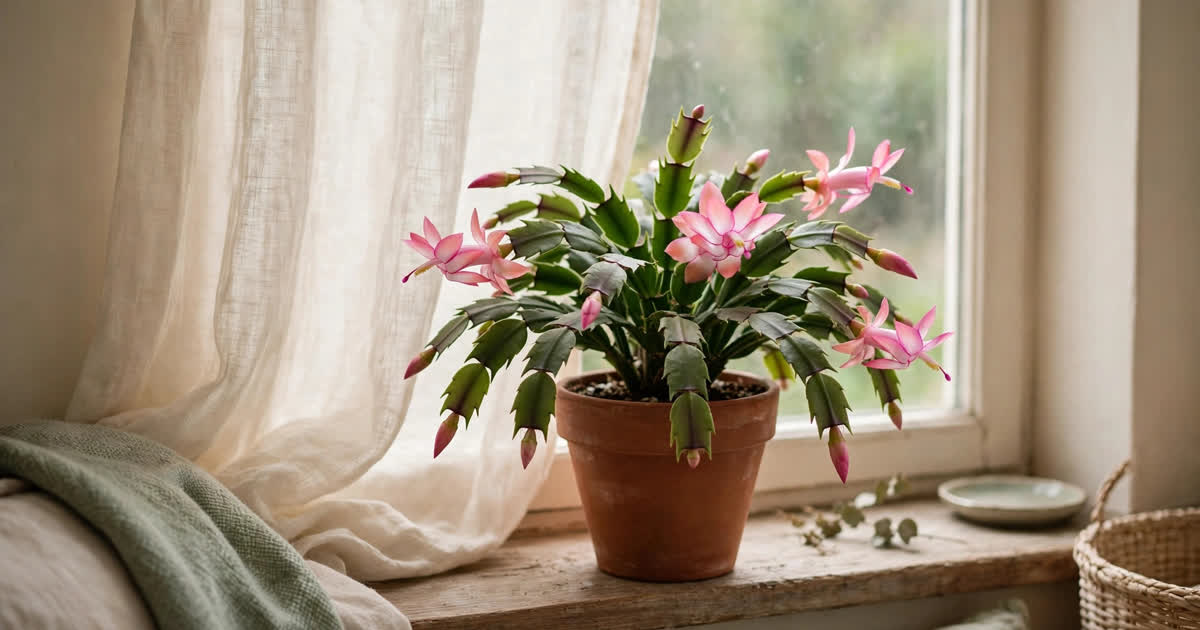
Why it stops blooms: Christmas cactus evolved in dappled forest shade, and direct sun scorches its segments, turning them red or purple and stressing the plant so badly it puts all its energy into survival instead of flowers. A sunburned cactus rarely blooms well, because it is spending the autumn repairing damage rather than setting buds.
What to do instead: give it bright indirect light — a north- or east-facing windowsill, or a spot a metre back from a south-facing window with a sheer curtain. Red or purple segments are the plant telling you it is getting too much sun; move it, and the green usually returns within weeks. In winter, when the sun is weak, a little more light is fine, but never a full day of direct midday sun.
2. Watering it like a desert cactus
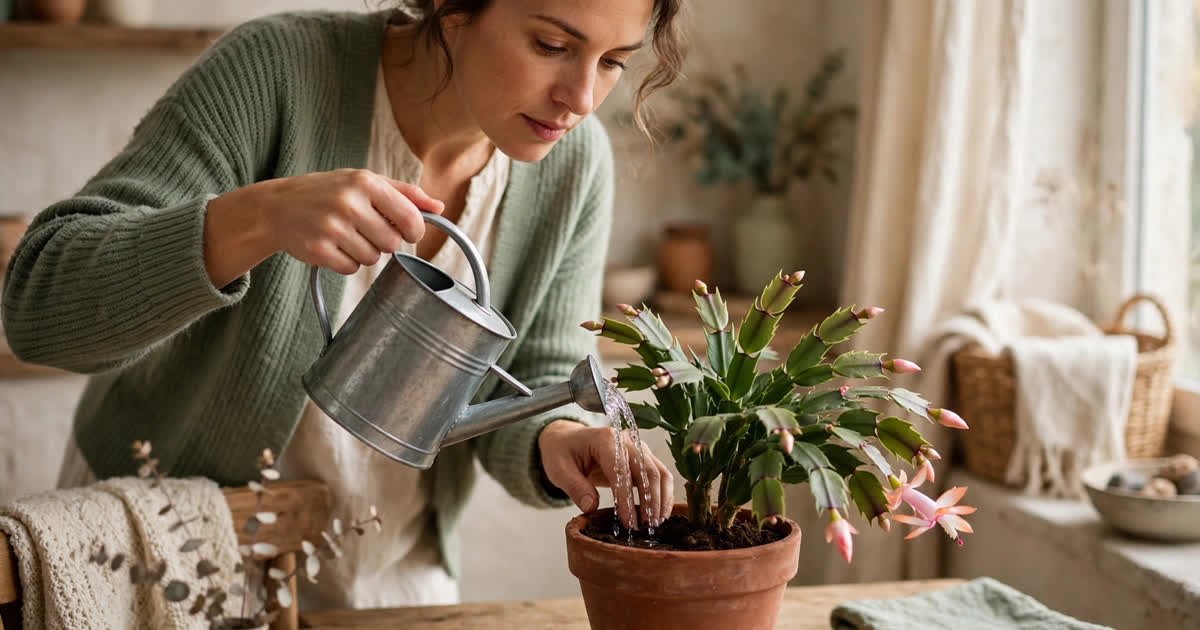
Why it stops blooms: the name is a trap. A Christmas cactus is a tropical plant that likes its soil lightly moist, not bone dry for months. Letting it dry out completely between waterings stresses the roots, and the first thing a stressed plant drops is its buds — or never forms them at all.
What to do instead: water when the top 2–3 cm of soil feels dry, and water thoroughly until it runs from the drainage holes, then empty the saucer. Never let the plant sit in water, which rots the roots just as surely as drought starves them. In the bud-setting period of autumn, keep watering steady and even — wild swings between soaked and parched are the most common reason buds form and then fall off.
3. Keeping it too warm at night
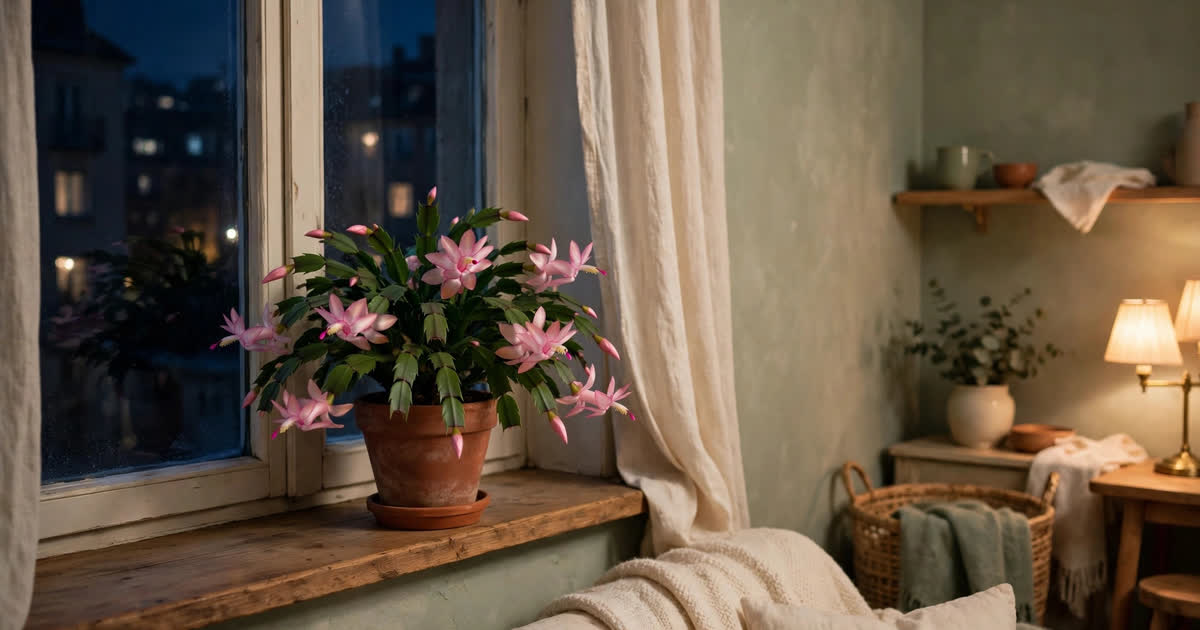
Why it stops blooms: bud formation needs cool nights — around 13–16°C — for several weeks in autumn. A plant kept in a centrally heated living room at 21°C around the clock never gets the signal that winter is coming, so it never sets buds, however healthy it looks.
What to do instead: from September to November, give the plant a cool spot at night — a cooler bedroom, a hallway, or a windowsill away from the radiator. Daytime warmth is fine; it is the night temperature that matters. If your whole flat is warm, even moving the plant to the coolest windowsill for six weeks in autumn can be enough to trigger blooming. This single change rescues more non-blooming Christmas cacti than any other.
4. Leaving the lights on after dark
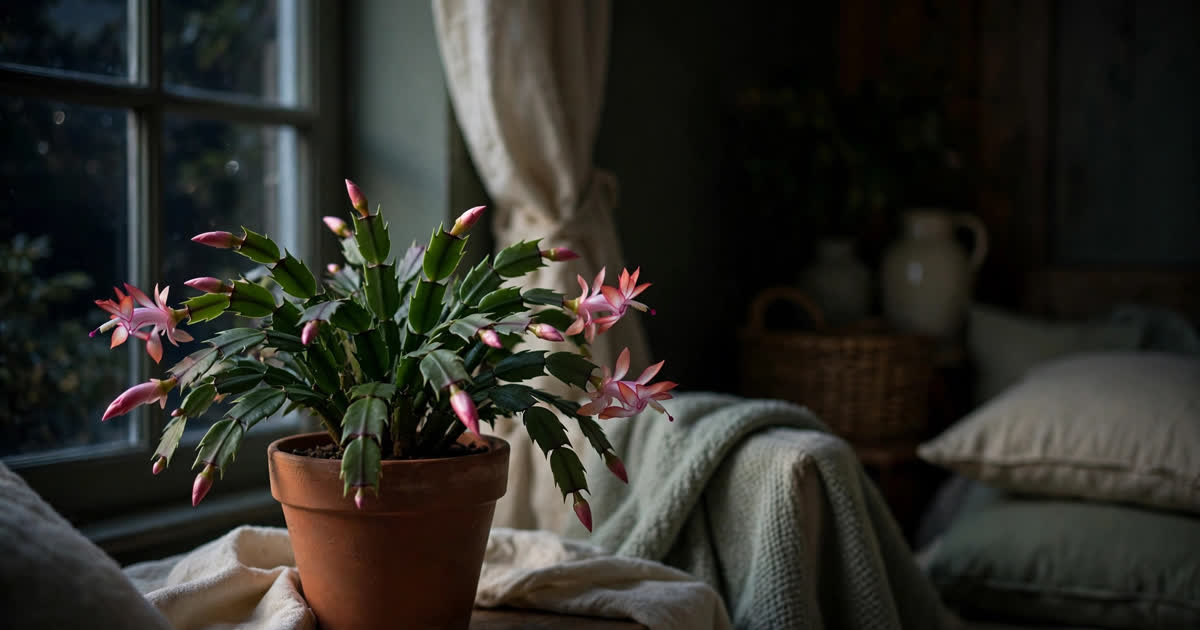
Why it stops blooms: Christmas cactus is a short-day plant — it counts the hours of darkness, and it needs 12–14 hours of uninterrupted darkness each night for several weeks to set buds. A lamp, a television or a hallway light left on near the plant resets the count every night, and the plant never gets the message.
What to do instead: from September, make sure the plant gets true darkness from early evening to morning — move it to a room you do not use in the evening, or simply stop switching on the lamp nearest to it. Even brief light matters: a few minutes of bright light in the middle of the night can interrupt the process. This is why cacti in spare bedrooms bloom reliably and cacti in living rooms often do not.
5. Repotting it at the wrong time — or too often
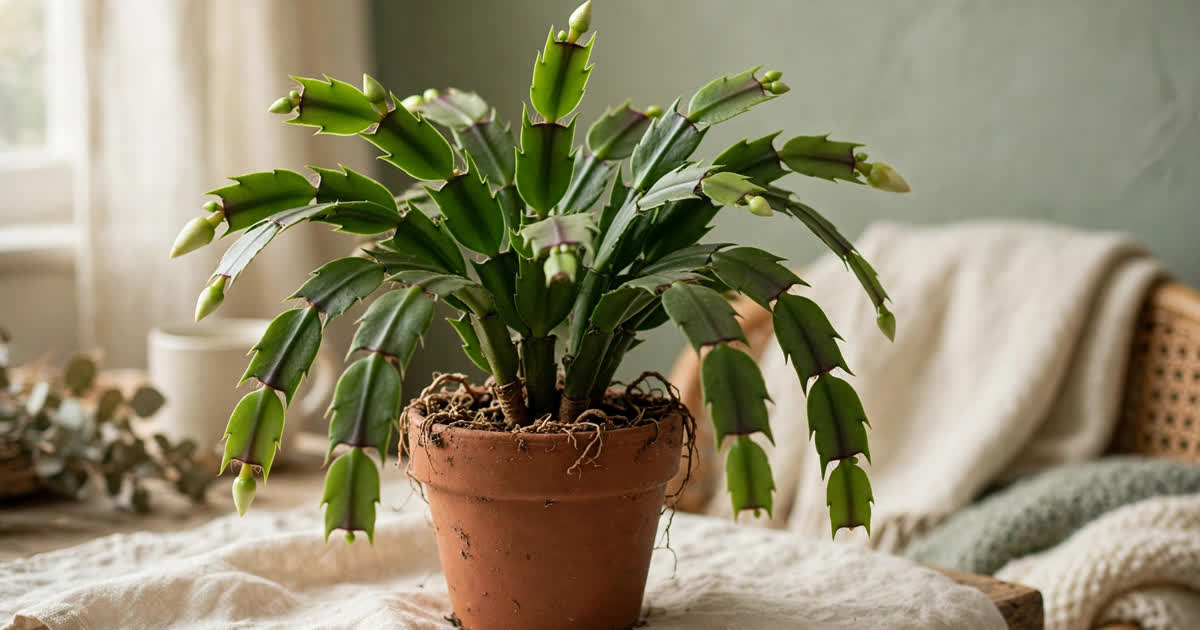
Why it stops blooms: Christmas cactus blooms best when slightly root-bound, and it hates being disturbed. Repotting in autumn, just as buds should be forming, shocks the roots and the plant aborts its flowering plans for the year. Repotting every year has the same effect — the plant never settles long enough to bloom.
What to do instead: repot only every two to three years, in spring after flowering finishes, and only into a pot one size larger. Use a free-draining mix — ordinary potting compost with added perlite or orchid bark — and a pot with drainage holes. A snug pot is not neglect; for this plant, it is the condition that triggers the best flowering.
6. Feeding it at the wrong time of year
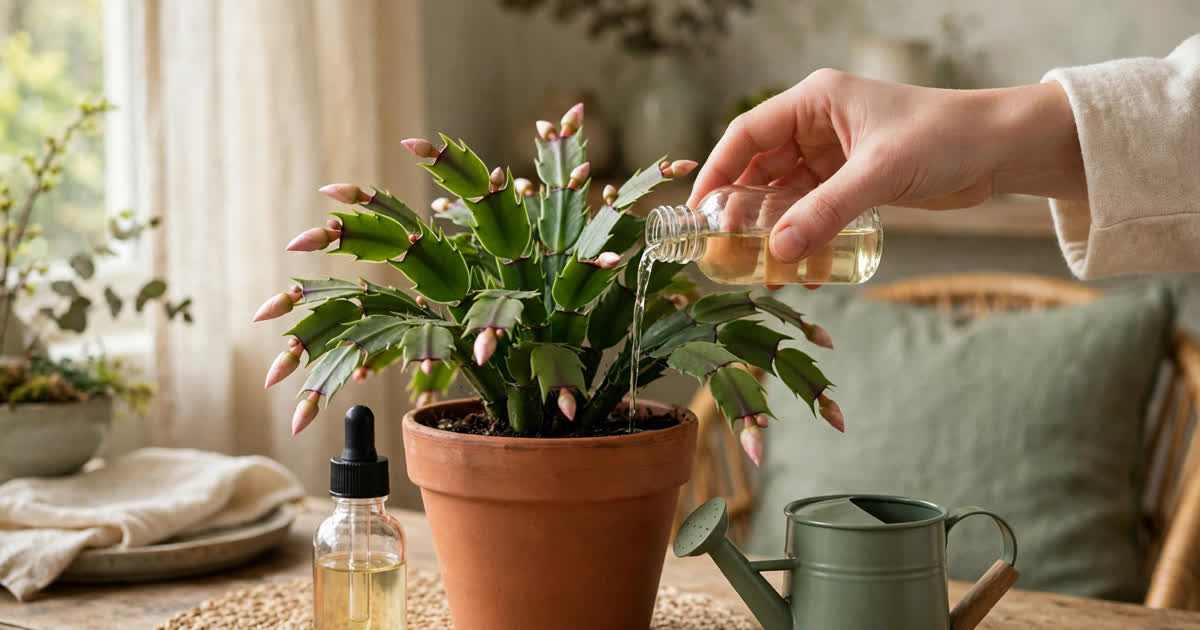
Why it stops blooms: feeding in autumn and winter, when the plant should be resting and setting buds, pushes soft leafy growth instead of flowers. Feeding a stressed or dry plant burns the roots. And never feeding at all leaves the plant without the energy to flower, especially an older plant in the same compost for years.
What to do instead: feed lightly — half-strength balanced liquid feed — every two to four weeks from spring through early summer, when the plant is actively growing. Stop feeding by late summer, and do not feed again until flowering finishes. This rhythm — feed for growth, rest for buds — matches the plant's natural cycle and gives it both the energy and the signal it needs.
7. Moving it once buds have formed
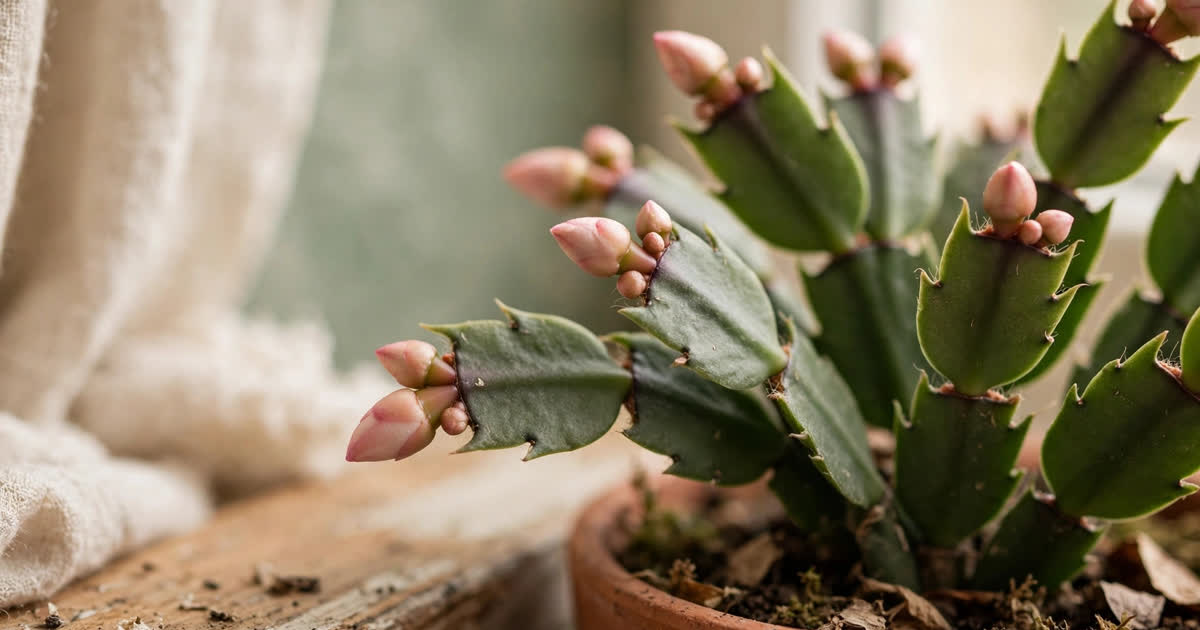
Why it stops blooms: once buds form, Christmas cactus becomes dramatically sensitive to change. Moving it to a warmer room, turning it to face a different direction, or even a cold draught from an opened window can make it drop every bud within days. Growers call this bud blast, and it is heartbreaking because the plant was so close.
What to do instead: once you see buds, do not move the plant, do not turn it, and keep its watering and temperature as steady as you can. If you must move it for a party, move it the day before and accept that some buds may drop — or better, enjoy the plant where it is and bring guests to it. A plant that drops its buds this year will usually try again next year if the autumn conditions are right.
8. Letting it dry out while buds are forming
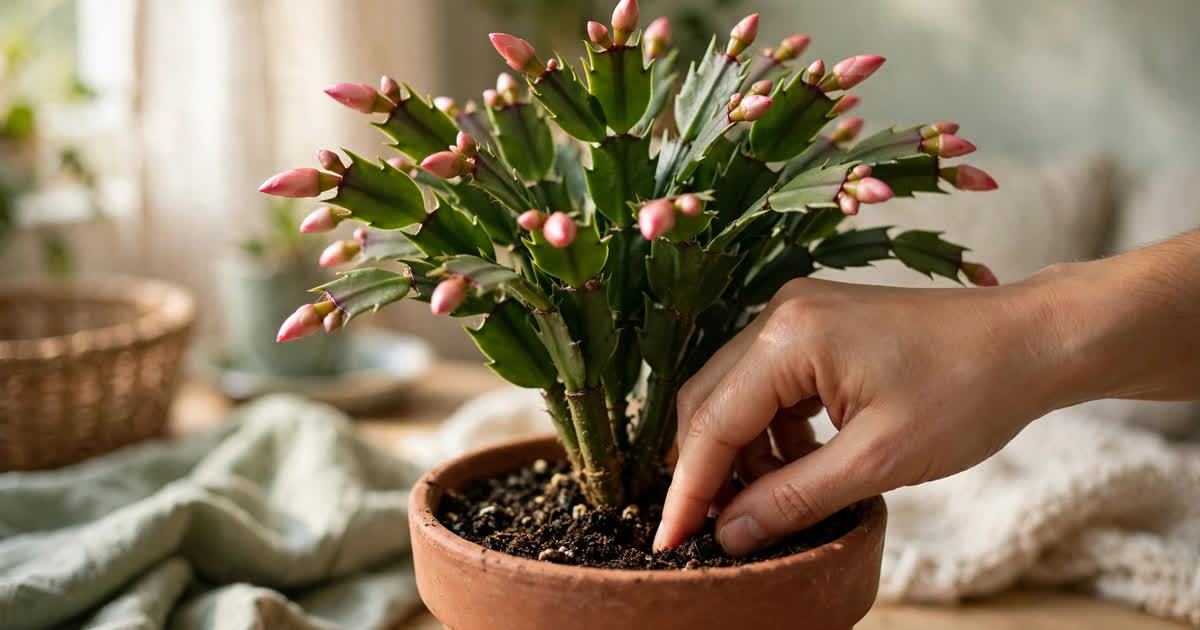
Why it stops blooms: the bud period is the one time this plant must not dry out. A cactus that has tolerated a dry summer happily will drop its buds at the first drought in autumn, because buds are expensive for the plant to maintain and the first thing it sacrifices when water is scarce.
What to do instead: during bud formation and flowering, check the soil twice a week and water before it dries out completely — the top centimetre dry, not the whole pot. Keep the plant away from radiators and hot air vents, which dry the soil and the air around the buds. A pebble tray of water under the pot helps with humidity, provided the pot itself does not sit in the water.
9. Expecting flowers from a Thanksgiving cactus in December
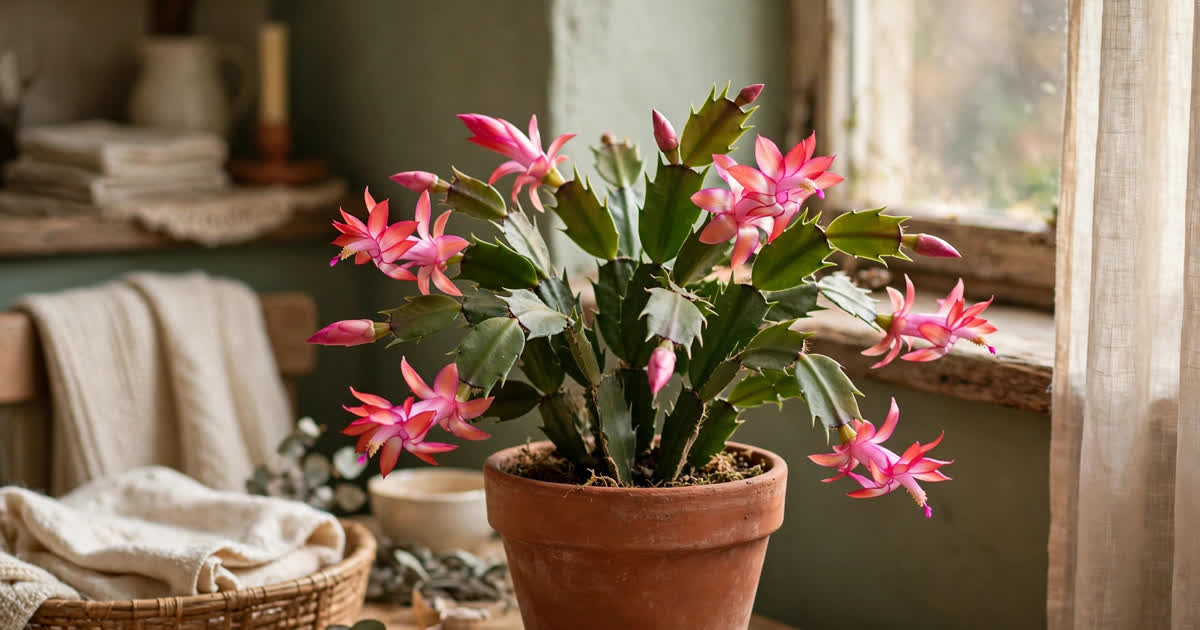
Why it stops blooms: this is not a care mistake at all, but an identity mistake — and it explains a huge number of "non-blooming Christmas cacti". Most plants sold as Christmas cactus are actually Thanksgiving cactus (Schlumbergera truncata), which has pointed segments and blooms in late November. True Christmas cactus (Schlumbergera x buckleyi) has rounded segments and blooms in December and January.
What to do instead: check the segments. Pointed, claw-like segments mean Thanksgiving cactus — it is not failing, it is just early, and it may already have bloomed in November while you were waiting for December. Rounded segments mean true Christmas cactus. Either way, the care in this article applies to both, and a plant that "never blooms at Christmas" may simply be blooming a month earlier than you expected. Check in November before you declare it a failure.
Shop this look: helping a Christmas cactus bloom
- Free-draining cactus and succulent compost — with added perlite for the roots. Shop cactus compost
- Balanced liquid houseplant feed — half-strength, spring to early summer only. Shop liquid houseplant feed
- A pot with drainage holes — one size up, never a giant leap. Shop pots with drainage holes
- A pebble tray for humidity — buds love humid air. Shop pebble trays for plants
- A soil moisture meter — no more guessing about watering. Shop soil moisture meters