A windowsill is the best real estate in a small flat for plants — bright light, free warmth, a view — and also the most unforgiving. A pot that is one centimetre too wide blocks the window from closing, a pot without drainage ruins the paint, and a heavy ceramic pot on a narrow sill is a fall waiting to happen. The planters below are chosen for the actual dimensions of a flat windowsill: narrow, light, stable, and kind to the surface they sit on.
The two rules for any windowsill planter are drainage and weight. Drainage, because a plant with wet feet rots, and a sill with standing water peels paint and grows mould. Weight, because a sill is a ledge, not a table — keep each pot light enough to lift with one hand, and keep the heaviest pots away from the edge. If you are building a whole windowsill garden, our windowsill garden guide covers light and layout for the colder months.
1. Narrow terracotta trough planters
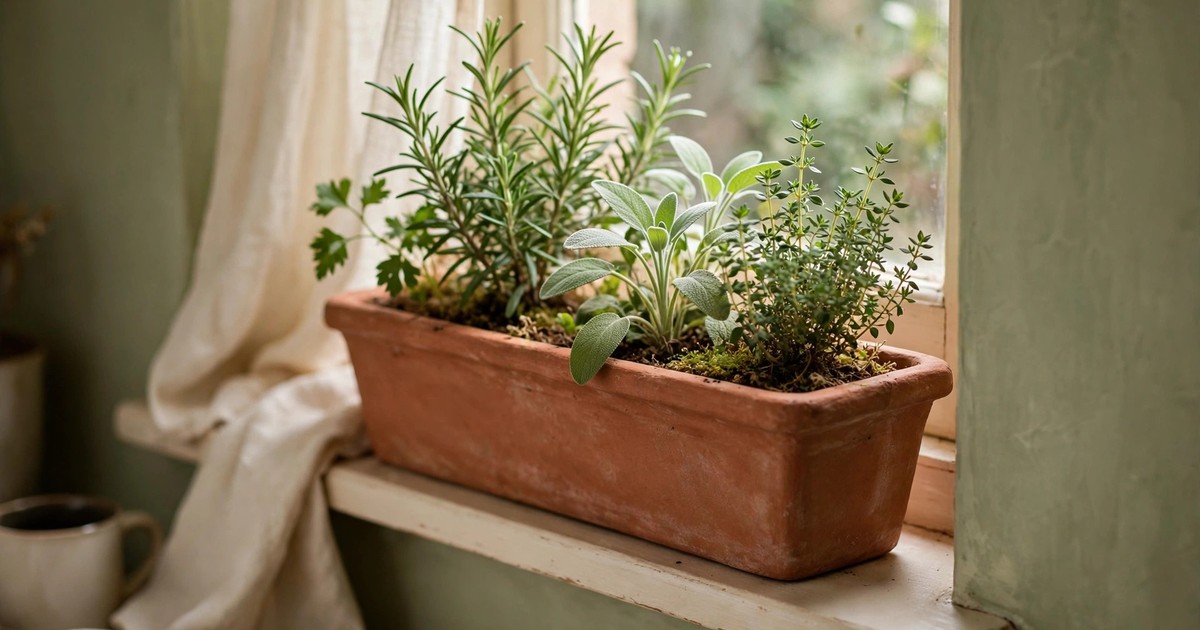
A trough is the windowsill planter in its purest form: long, narrow, and shaped exactly like the sill it sits on. Terracotta breathes, which keeps roots healthy, and a trough lets you plant a row of herbs or small succulents in one container instead of juggling five separate pots. Look for troughs 10–12 cm deep — deep enough for roots, shallow enough to leave the window usable.
Why it works: one trough replaces a clutter of pots, and the row of plants reads as a single intentional display rather than a collection of strays. Terracotta's weight is its one drawback on a sill, so keep troughs to 40 cm or shorter and use a saucer underneath to protect the paint.
Where it fits: kitchen windowsills for herbs, living room sills for succulents. Shop terracotta trough planters
2. Self-watering windowsill pots
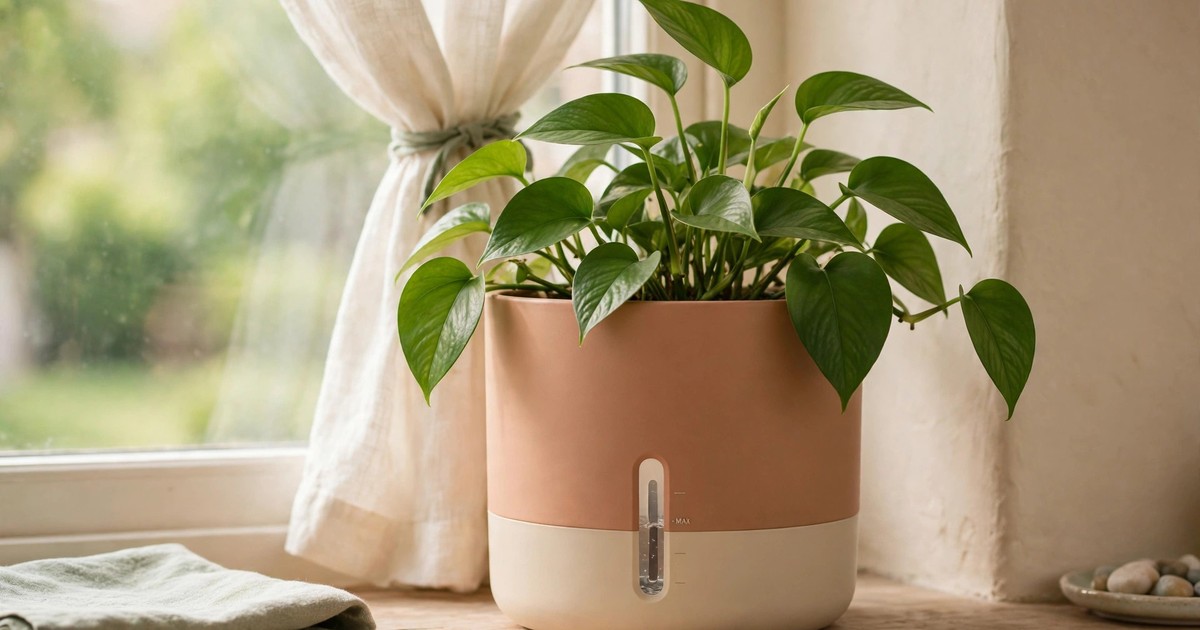
A self-watering pot has a water reservoir at the base and a wick that draws moisture up as the soil dries, which means a plant on a sunny sill — where soil dries fast — waters itself for a week or more. For anyone who forgets to water, or who travels, this is the planter that keeps plants alive through neglect.
Why it works: it solves the windowsill's biggest problem, which is fast drying. Sunny sills dry soil in a day or two in summer, and a reservoir buys you a week of forgiveness. Choose a pot with a water-level indicator if you can, so you know when the reservoir is actually empty rather than guessing.
Where it fits: sunny windowsills, and any sill where the plant is out of easy watering reach. Shop self-watering windowsill pots
3. Suction-cup window planters
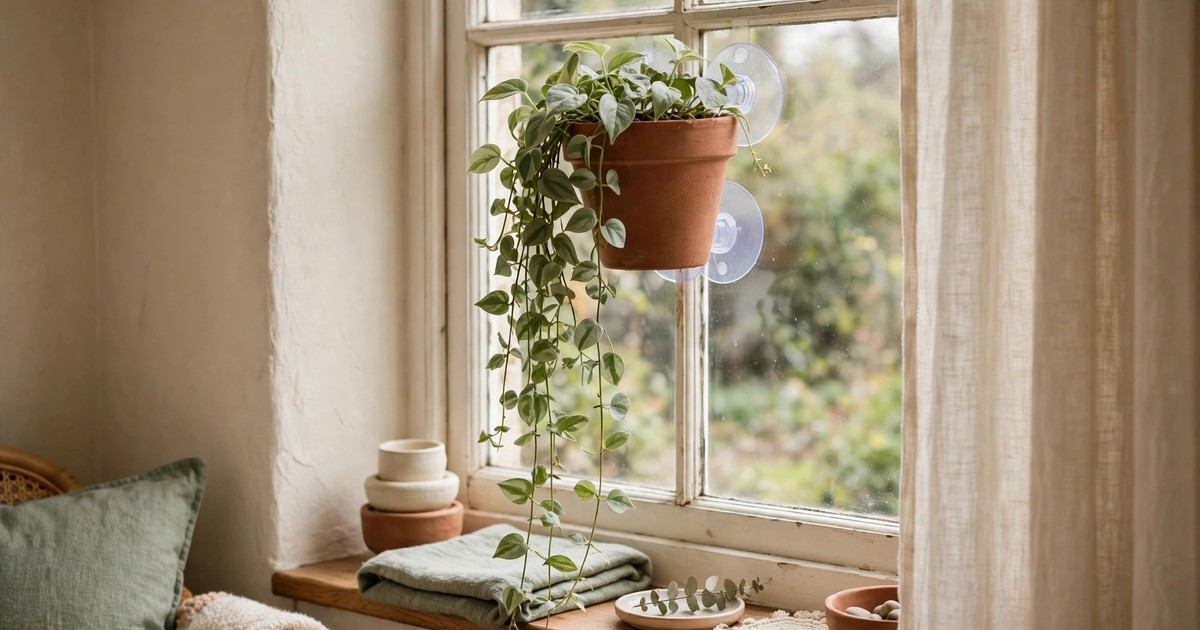
A suction-cup planter sticks directly to the window glass, which means it uses no sill space at all — the plant hangs in the light, at eye level, in a spot that would otherwise be empty. This is the answer for flats where the sill is too narrow for any pot, or where the sill is already full and you want one more plant.
Why it works: it turns the glass itself into growing space, and trailing plants look spectacular hanging against the light. The caution is weight: suction cups hold light pots reliably, but a heavy, waterlogged pot will fall. Keep these planters small, water them over the sink, and re-press the cups monthly.
Where it fits: any smooth window glass, especially kitchen and bathroom windows. Shop suction-cup window planters
4. Slim ceramic pots with drainage and saucers
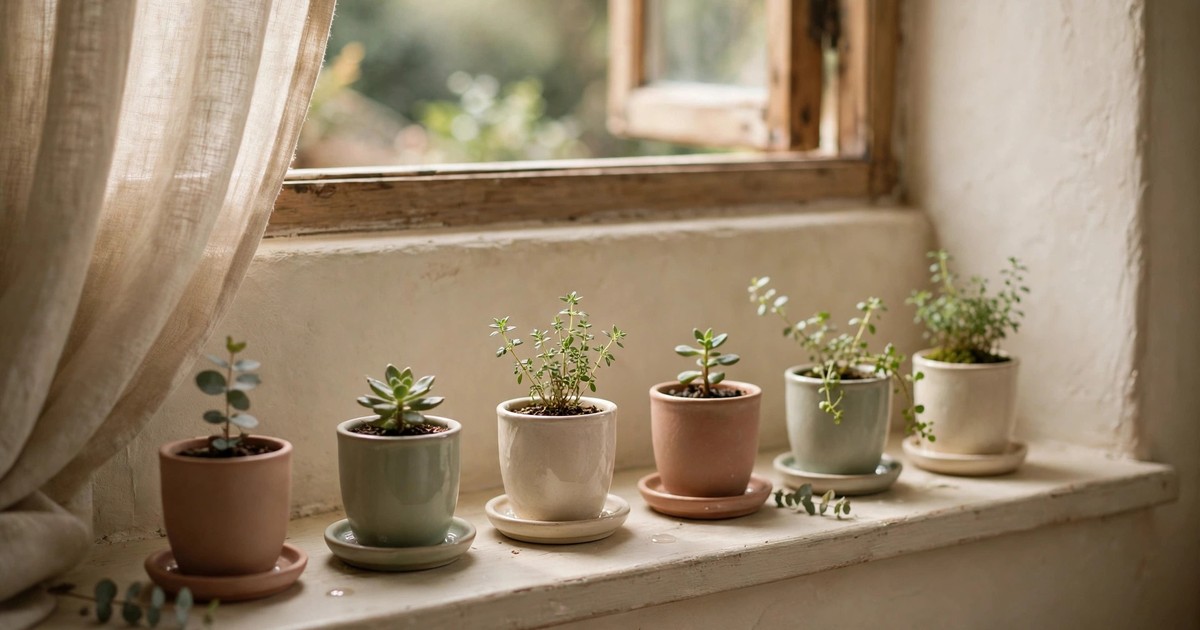
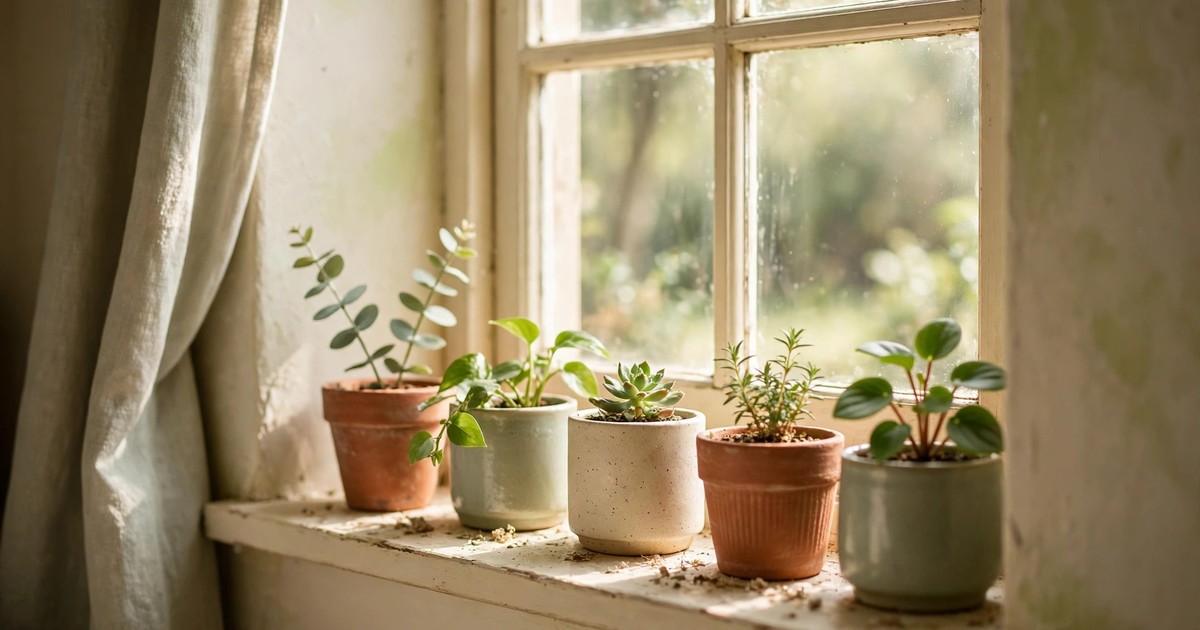
Sometimes the simplest answer is the right one: a slim ceramic pot, 10–12 cm across, with a drainage hole and a matching saucer. Ceramic looks better than plastic, holds a plant steady in a breeze from an open window, and a row of matching pots turns a windowsill into a display rather than a jumble.
Why it works: matching pots are the cheapest way to make a plant collection look curated. Buy one style in two or three sizes, and the whole sill reads as designed. The saucer is non-negotiable — a pot without one will stain a painted sill within a season, and that stain comes out of your deposit.
Where it fits: any windowsill, in rows of two or three. Shop small ceramic pots with saucers
5. Macramé hanging planters for the window
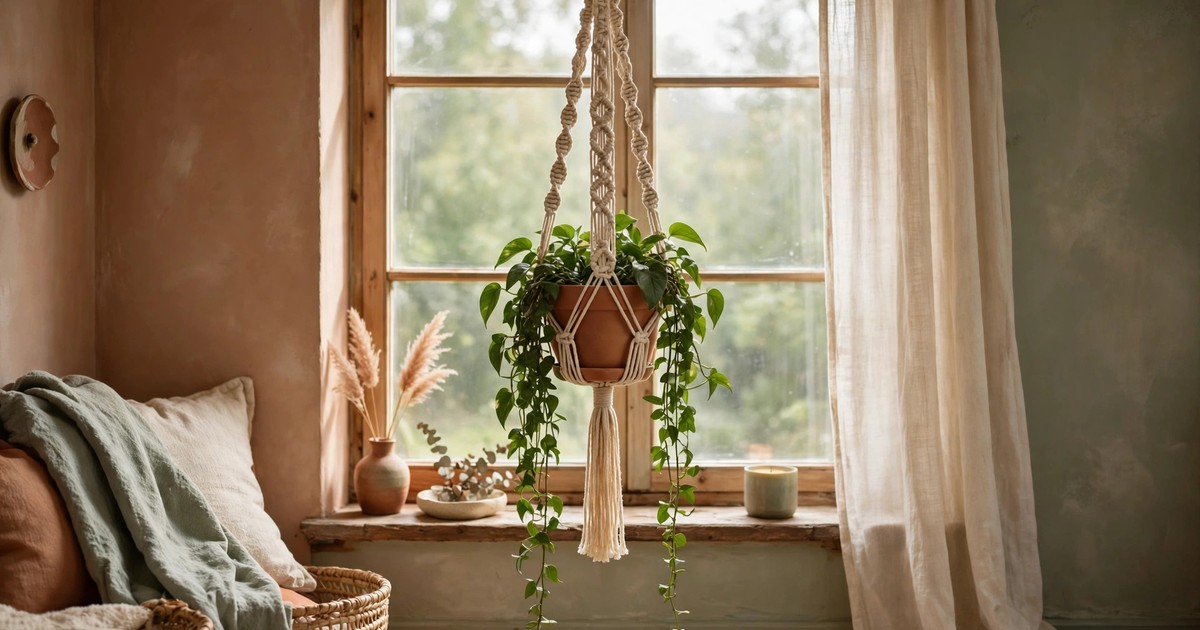
A macramé hanger suspends a plant from a hook above the window, which means the plant gets the window's light without taking a centimetre of sill. Trailing plants — pothos, string of hearts, spider plants — look their best hanging, and a macramé hanger adds texture and warmth that a plastic pot never will.
Why it works: it uses vertical space, which is the one dimension a small flat has in abundance. A hook in the window frame or the ceiling above the window holds the hanger, and the plant can be lowered for watering and lifted back up — no sill space sacrificed at all.
Where it fits: windows with a frame or ceiling strong enough for a small hook, especially living rooms. Shop macramé hanging planters
6. Stackable vertical planters for deep sills
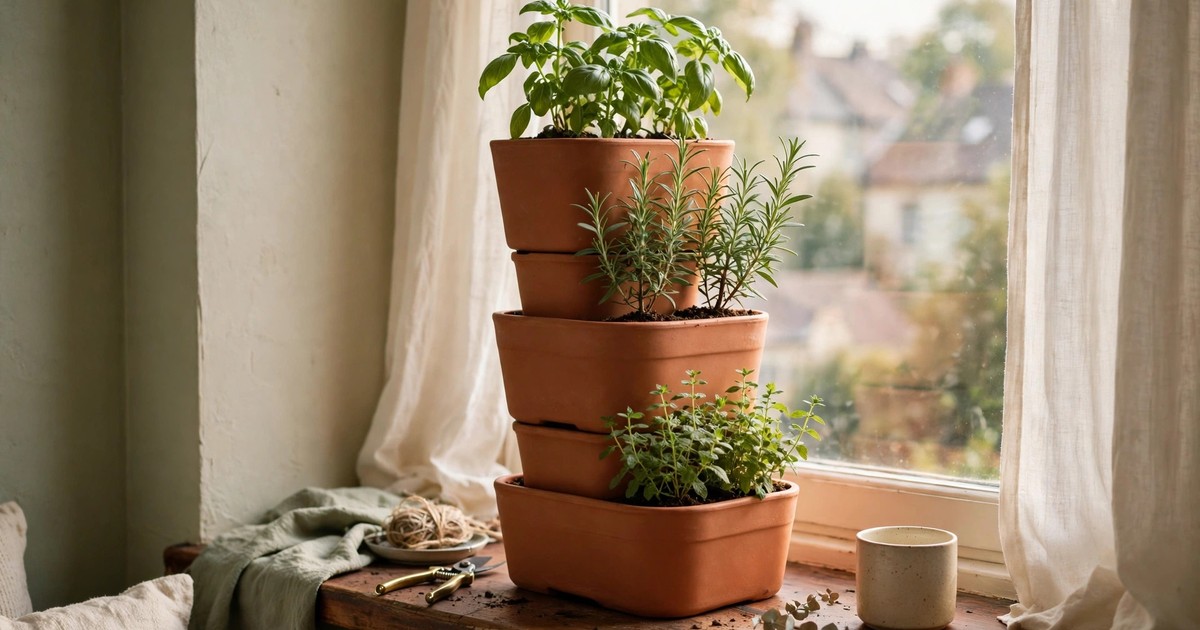
A deep windowsill — the kind in older buildings, 25 cm or more — can hold a stackable vertical planter: two or three tiers of pots that rise instead of spreading. This turns one plant's footprint into three or four plants' worth of growing space, which is exactly what a small flat needs.
Why it works: it multiplies capacity without widening the footprint, and the tiered shape means every plant still gets light — the top tier does not shade the lower ones as much as a flat row would. Keep the heaviest pots on the bottom tier for stability, and water from the top so excess drains down through the stack.
Where it fits: deep windowsills, especially in older flats and bay windows. Shop stackable vertical planters
7. Bamboo planter boxes
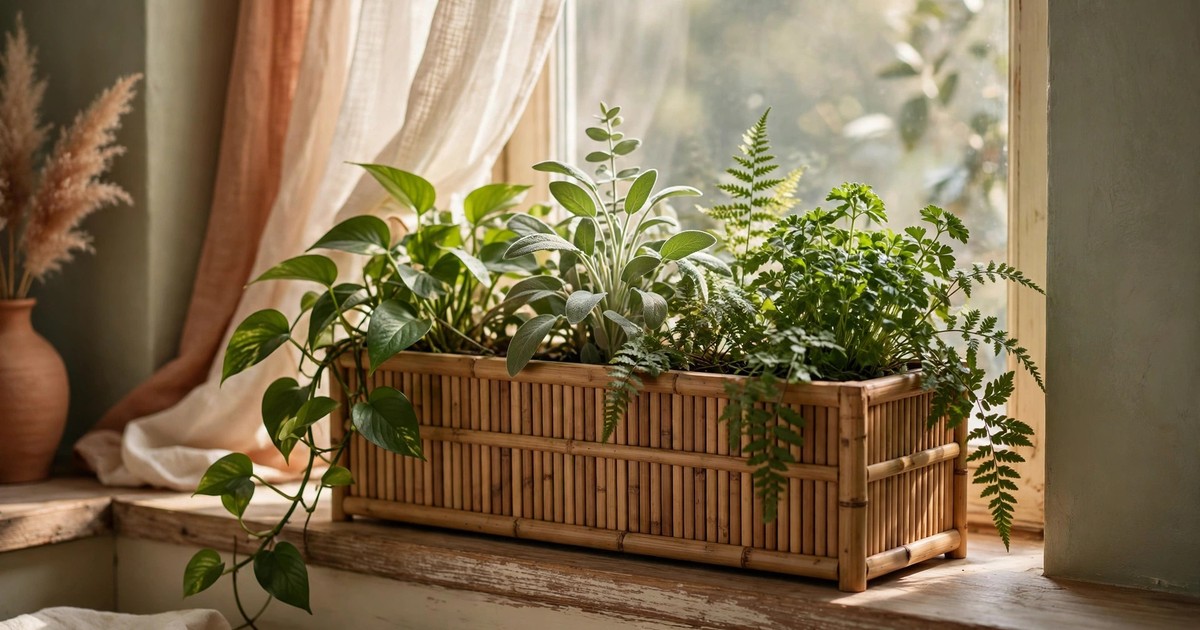
A bamboo planter box is light, warm-toned and naturally water-resistant, which makes it one of the best windowsill materials — it will not stain the sill, it will not rust, and it suits the terracotta-and-cream palette of a cozy flat. Look for boxes with a removable plastic liner, so the bamboo itself never sits in wet soil.
Why it works: bamboo is lighter than ceramic and warmer than plastic, so it is easy to move for cleaning the sill and kind to the surface underneath. A liner is the detail that makes it last: without one, constant damp rots the bamboo within a year; with one, it lasts for many.
Where it fits: kitchen and living room sills, especially in warm, natural-toned rooms. Shop bamboo planter boxes
8. Magnetic planters for metal window frames
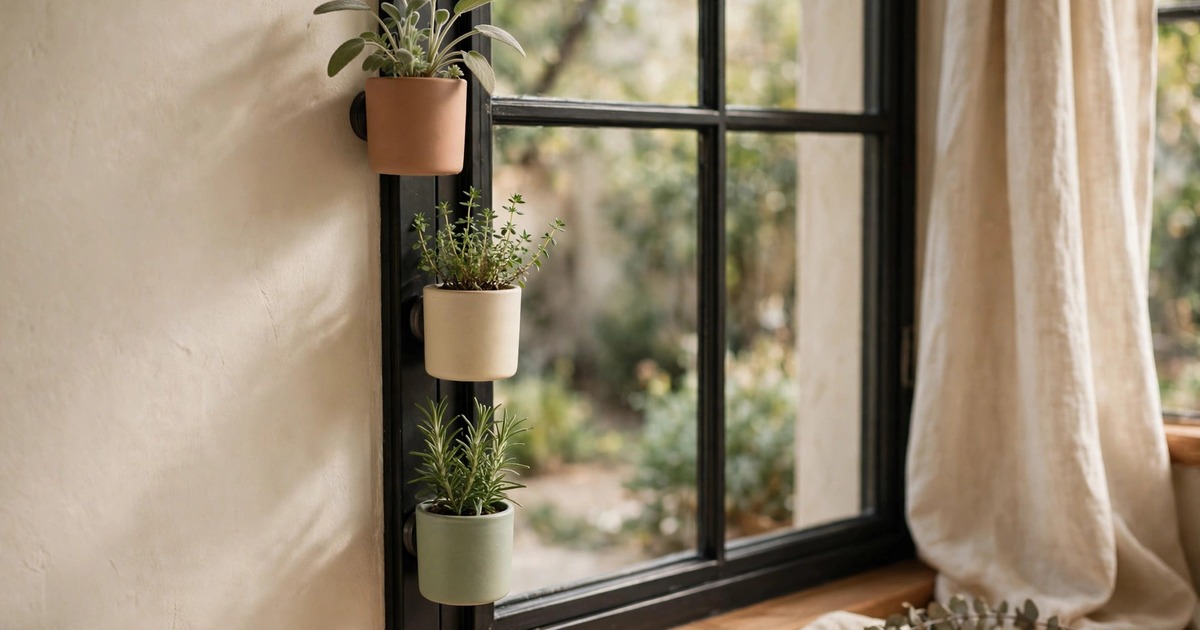
If your flat has metal window frames — common in newer buildings — magnetic planters stick straight to the frame, holding a small herb or succulent in the light without any sill space at all. They are tiny, usually one plant each, and they are the most space-efficient planter on this list.
Why it works: it uses a surface that is otherwise completely dead space, and a row of magnetic planters along a metal frame looks like a design feature rather than a workaround. Test your frames with a fridge magnet first — if it sticks, magnetic planters will work; if not, suction-cup planters are the equivalent for glass.
Where it fits: metal window frames, metal doors, and any magnetic surface near a window. Shop magnetic planters
9. Glass propagation stations that double as planters
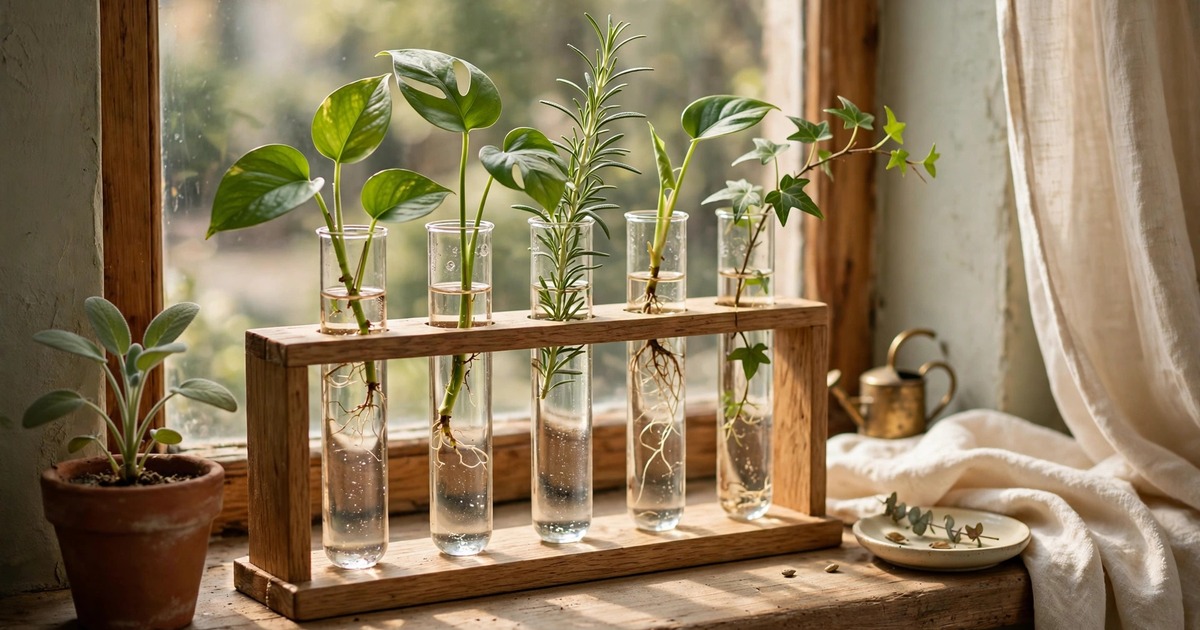
A propagation station — a wooden stand holding glass tubes or bottles — is where cuttings root in water, and it earns its place on this list because it is the prettiest thing you can put on a windowsill. The glass catches the light, the roots are visible and fascinating, and a cutting that roots becomes a free plant for another pot.
Why it works: it turns plant care into a display. A propagation station costs little, takes almost no space, and gives you a reason to look at your windowsill every day — which means you notice when other plants need water, too. Change the water weekly so it stays clear and algae-free.
Where it fits: sunny windowsills, especially kitchens where cuttings are close at hand. Shop glass propagation stations