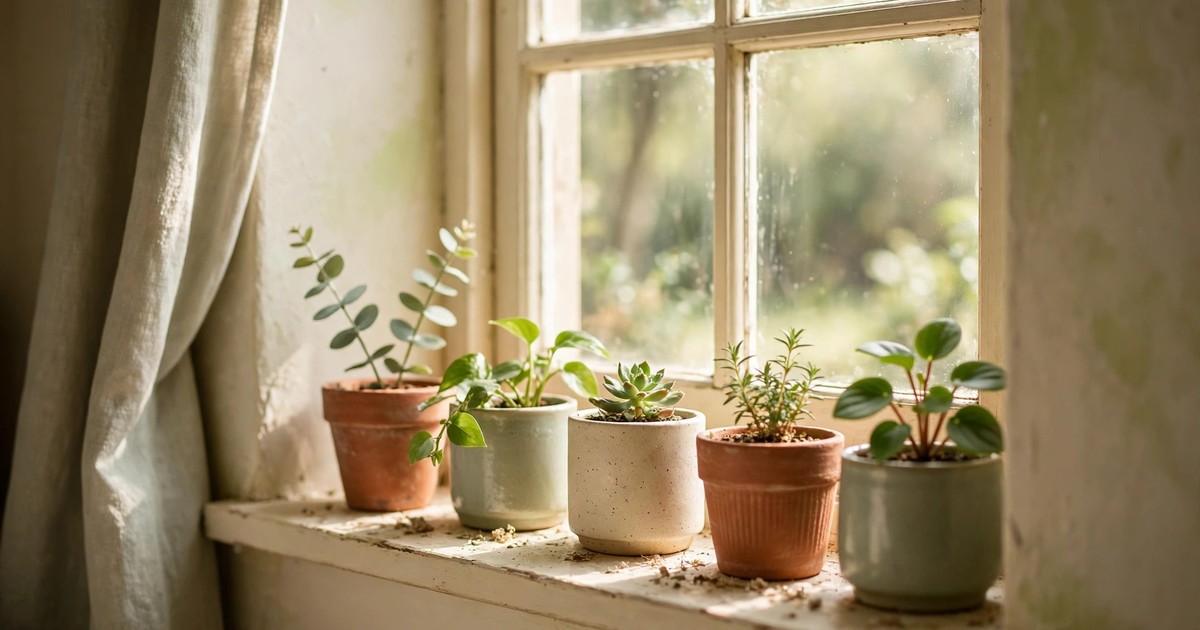
Central heating is the quiet killer of houseplants in winter. A heated flat in January often sits at 20–30% humidity, while most tropical houseplants — monstera, calathea, ferns, peace lilies — want 40–60%. The symptoms look like underwatering: crispy leaf edges, brown tips, dropping leaves. So people water more, and the real problem gets worse, because the roots drown while the air stays dry.
A humidifier fixes this, but it is not the only fix, and in a small flat it is not always the best one: it takes counter space, needs refilling and cleaning, and can leave white mineral dust on everything. The nine methods below raise humidity around your plants using things you already have, and most of them work best in combination — two or three small changes beat one big purchase. If your plants are struggling with winter generally, our winter plant care guide covers light, temperature and watering too.
1. Pebble trays under the pots
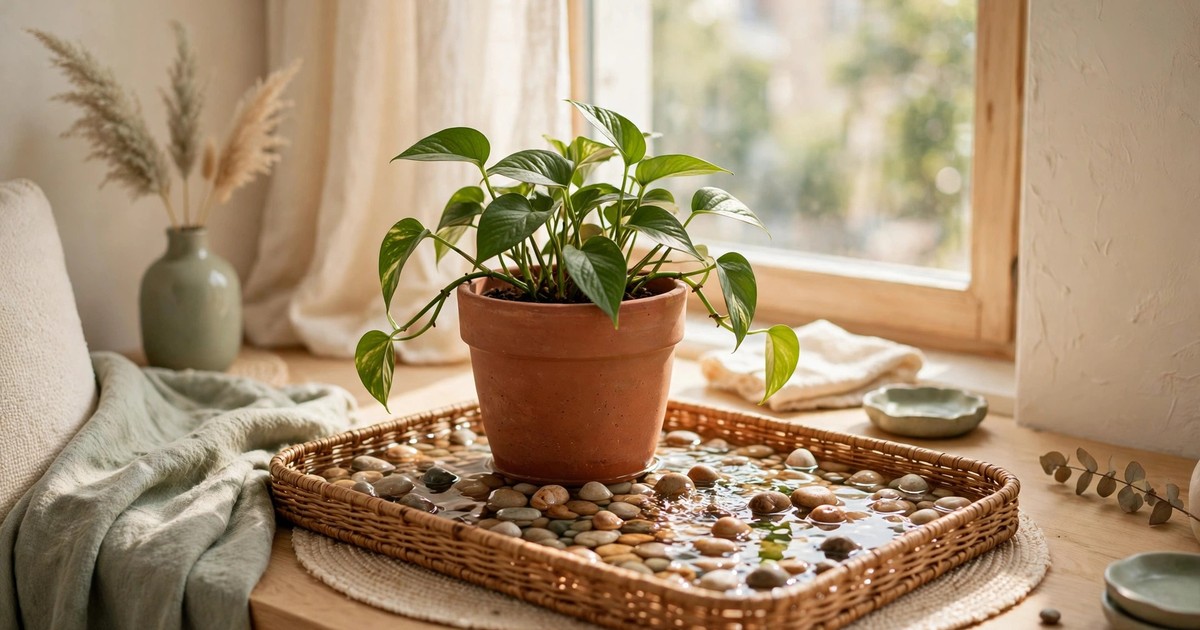
A pebble tray is a shallow tray filled with pebbles and water, with the plant pot sitting on top of the pebbles — never in the water. As the water evaporates, it raises the humidity in the few centimetres of air directly around the plant, which is exactly where the leaves are. It is the oldest humidity trick in the book because it works, and it costs almost nothing.
The detail people get wrong is the water level: keep it just below the top of the pebbles, so the pot stays dry. A pot sitting in water wicks moisture up into the soil, and you have traded a humidity problem for a root-rot problem. Top the tray up every few days, and clean it monthly so it does not grow algae.
2. Group plants together into a mini jungle
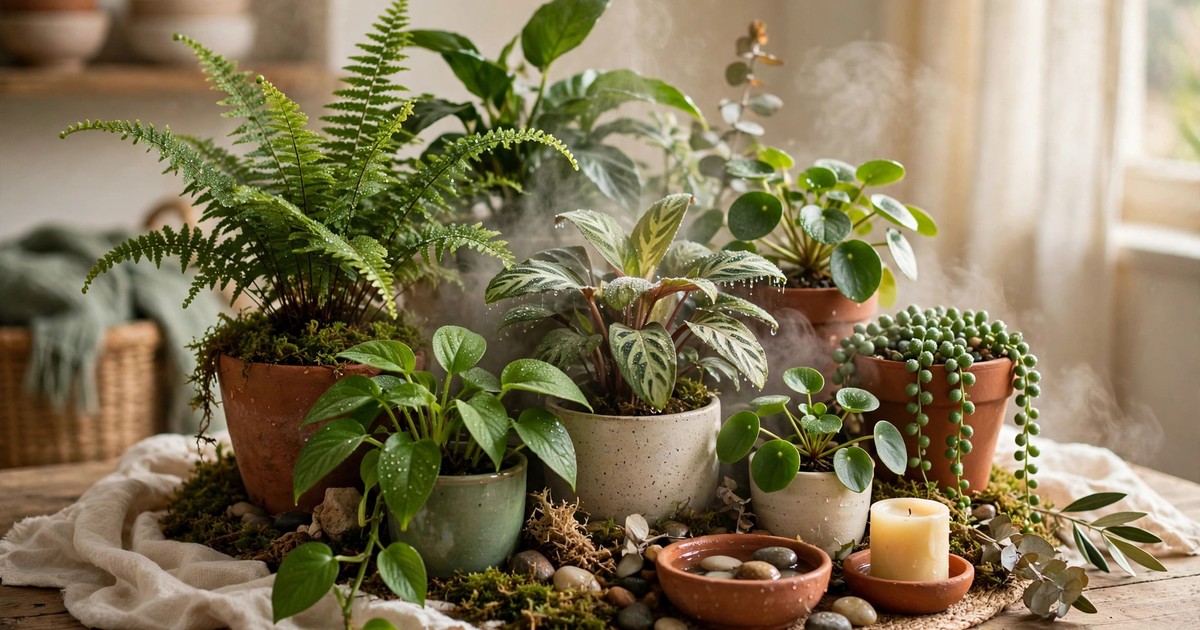
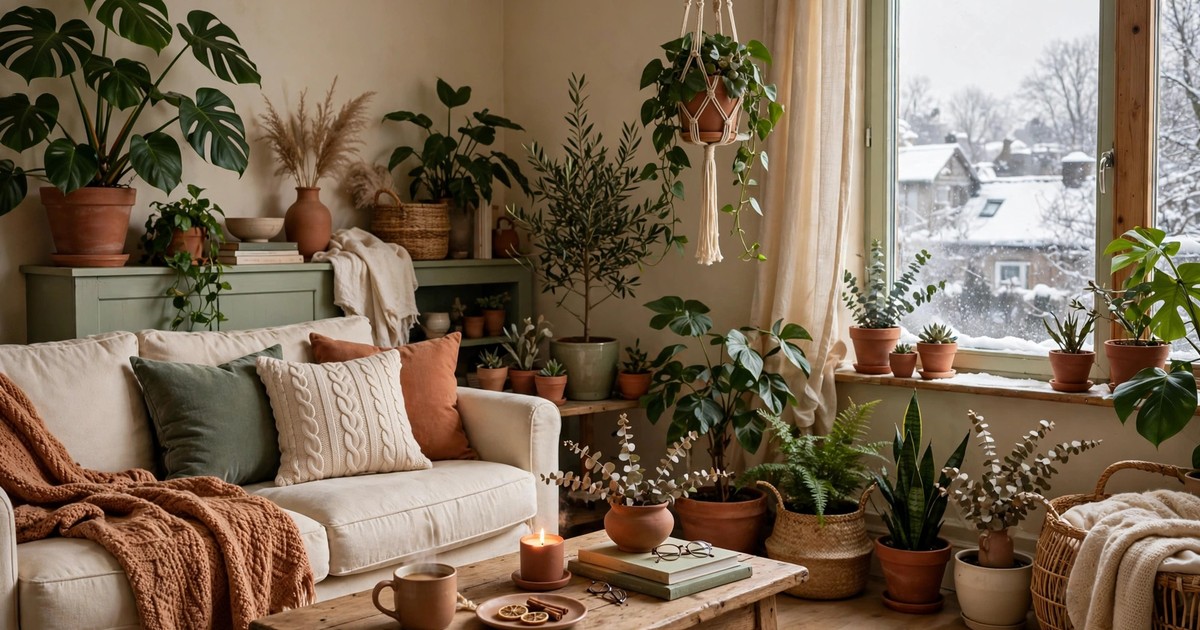
Plants release moisture through their leaves — it is called transpiration, and it is why a forest feels humid. Group your plants together and they create a shared pocket of humid air, each plant benefiting from its neighbours' moisture. A cluster of five or six plants on a table or a plant stand can raise local humidity by 5–10%, which is often the difference between crispy tips and healthy growth.
Grouping also makes care easier: you water, mist and check them all in one place, and you notice problems faster. Leave a little airflow between the plants, though — a dense, airless clump invites fungus and pests, so space them so leaves just touch rather than smother each other.
3. Move humidity lovers into the bathroom
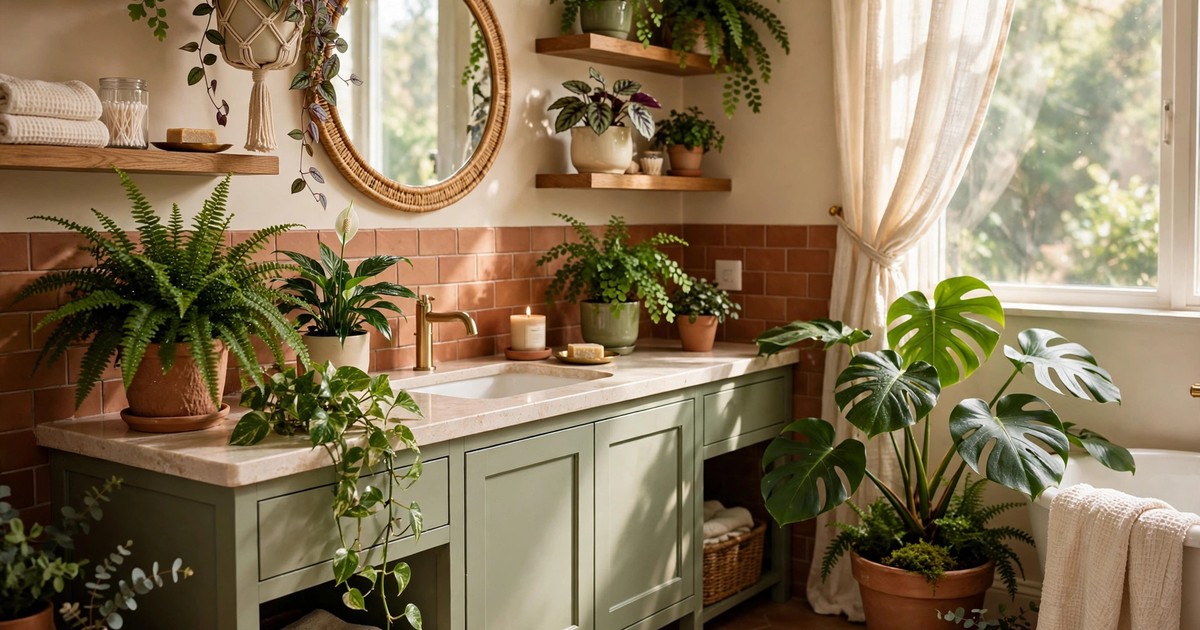
The bathroom is the most humid room in any flat, thanks to showers and baths, and it is the natural home for ferns, calatheas, peace lilies and other humidity lovers. A plant on a bathroom windowsill or a shelf gets a daily steam bath without any equipment at all, and it looks wonderful there — a fern in a bathroom feels like a boutique hotel.
The catch is light. Many bathrooms have small or frosted windows, so choose plants that tolerate lower light, or keep the humidity lovers in the bathroom only through the driest months and move them back to brighter rooms in spring. If your bathroom has no window at all, a plant will still enjoy the humidity but will slowly starve for light — rotate it out every couple of weeks.
4. Use the kitchen's steam
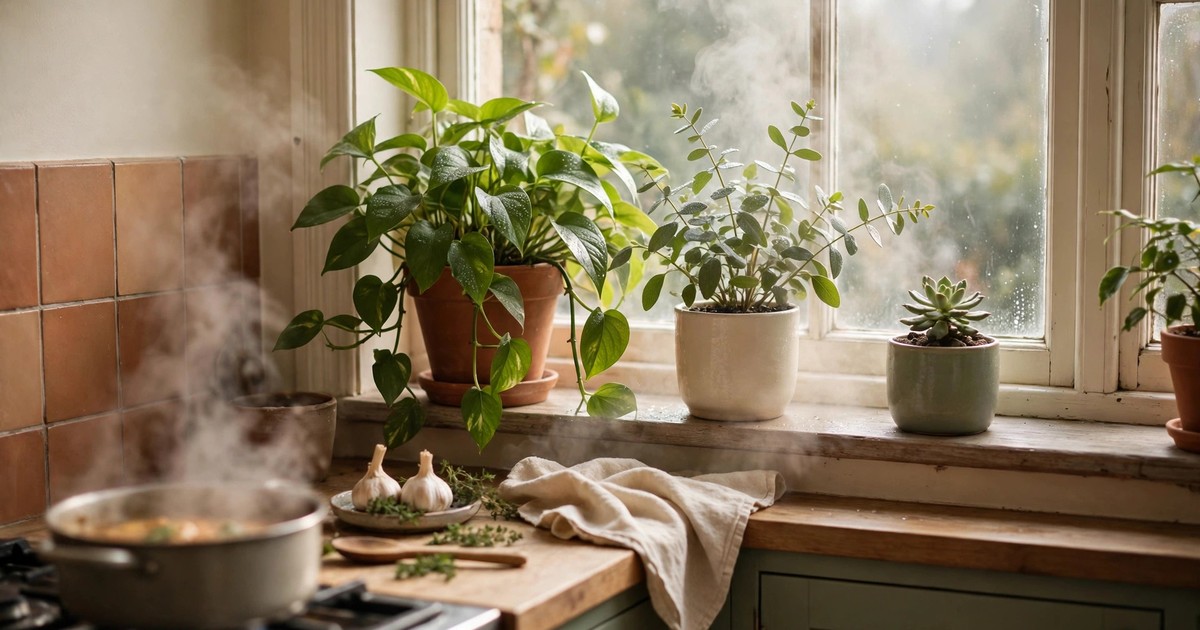
Cooking produces steam all winter — kettles, pots, dishwashers — and plants near the kitchen benefit from it for free. A windowsill above or beside the sink, or a shelf near the cooking area, gives herbs and trailing plants a regular humidity boost, and the warmth of the kitchen helps too, as long as plants are not right beside the hob where heat and grease damage leaves.
This is the ideal spot for kitchen herbs, which want both humidity and frequent harvesting. Keep plants away from direct cooking splashes and from the blast of an extractor fan, which dries leaves as fast as steam humidifies them, and wipe leaves occasionally to remove any grease film.
5. Mist — but only the right plants, the right way
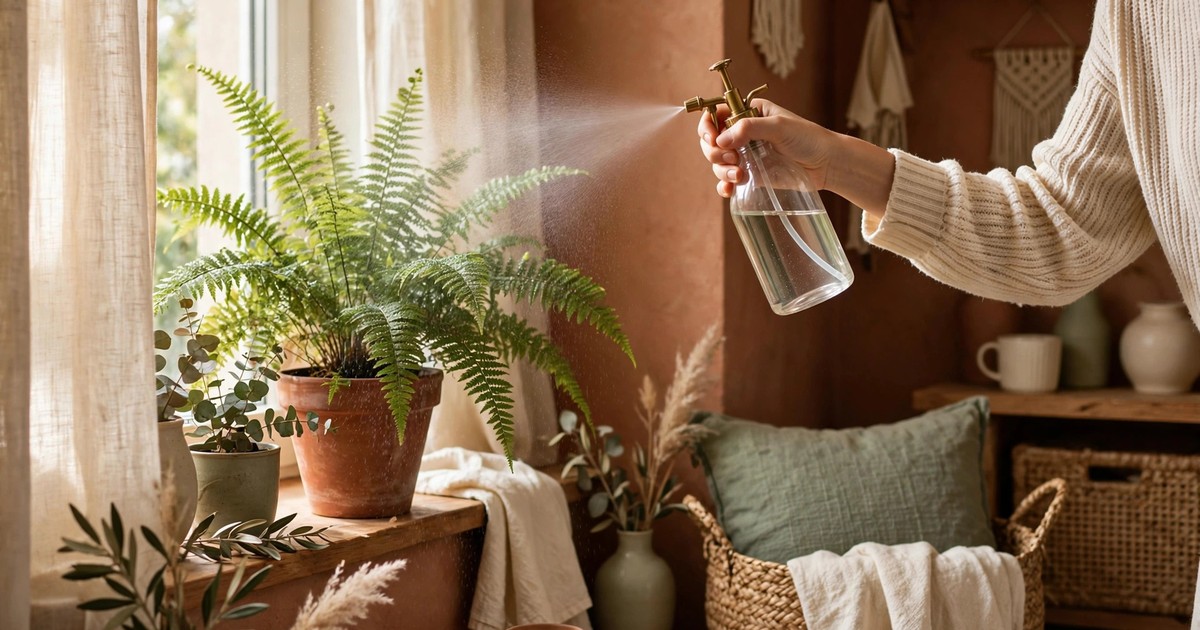
Misting is the most debated humidity trick, because it works briefly and then evaporates — a misted leaf is dry again within half an hour. It still has a place: for ferns, air plants and plants with thin leaves, a morning mist raises humidity for the crucial first hours of the day, and it cleans dust off leaves so they photosynthesise better.
The rules are simple. Mist in the morning, never in the evening, so leaves dry before night — wet leaves overnight invite fungus. Mist plants with thin, soft leaves, and skip plants with fuzzy leaves (African violets) or succulents, which hate wet foliage. And treat misting as a supplement, not a solution: pair it with grouping or a pebble tray, and it actually helps.
6. Bowls of water near heat sources
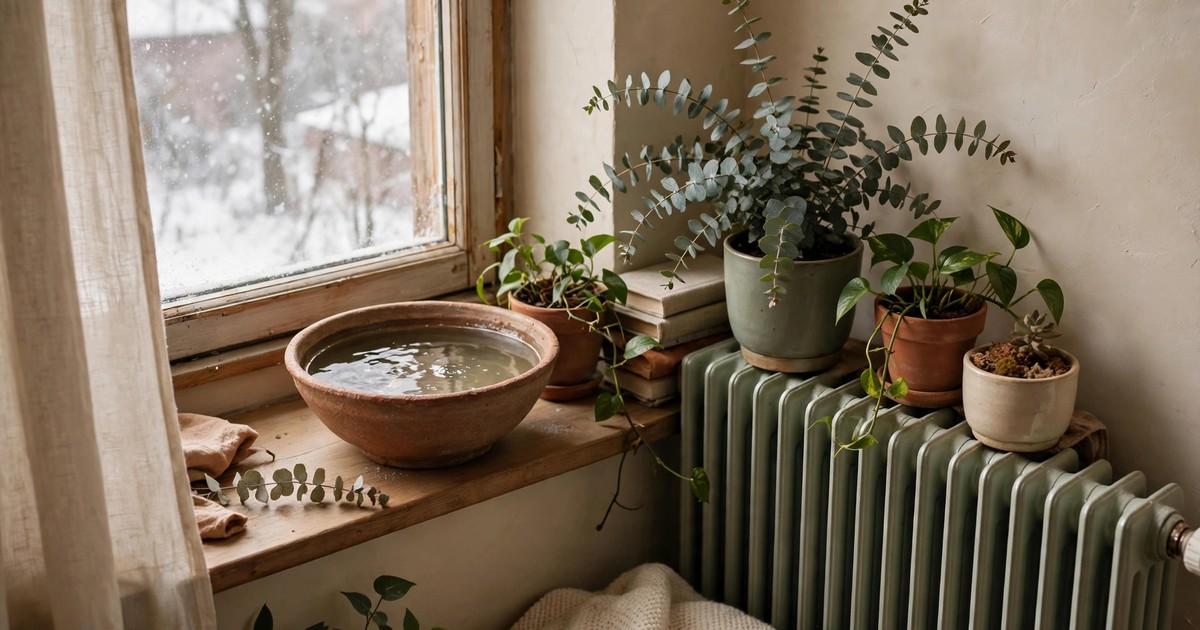
Radiators dry the air by heating it, but that same heat can work for you: a bowl of water placed near — not on — a radiator evaporates steadily all day, gently humidifying the room. It is the low-tech version of a humidifier, using the heat source that is already running, and it costs nothing.
Place the bowl where it will not be knocked over, keep it topped up, and do not put it directly on the radiator, where the water heats too fast and the bowl can crack or scorch. A wide, shallow bowl evaporates faster than a deep narrow one, because evaporation happens at the surface. This method raises whole-room humidity slightly, so it pairs well with grouping plants near the bowl.
7. Dry laundry near your plants
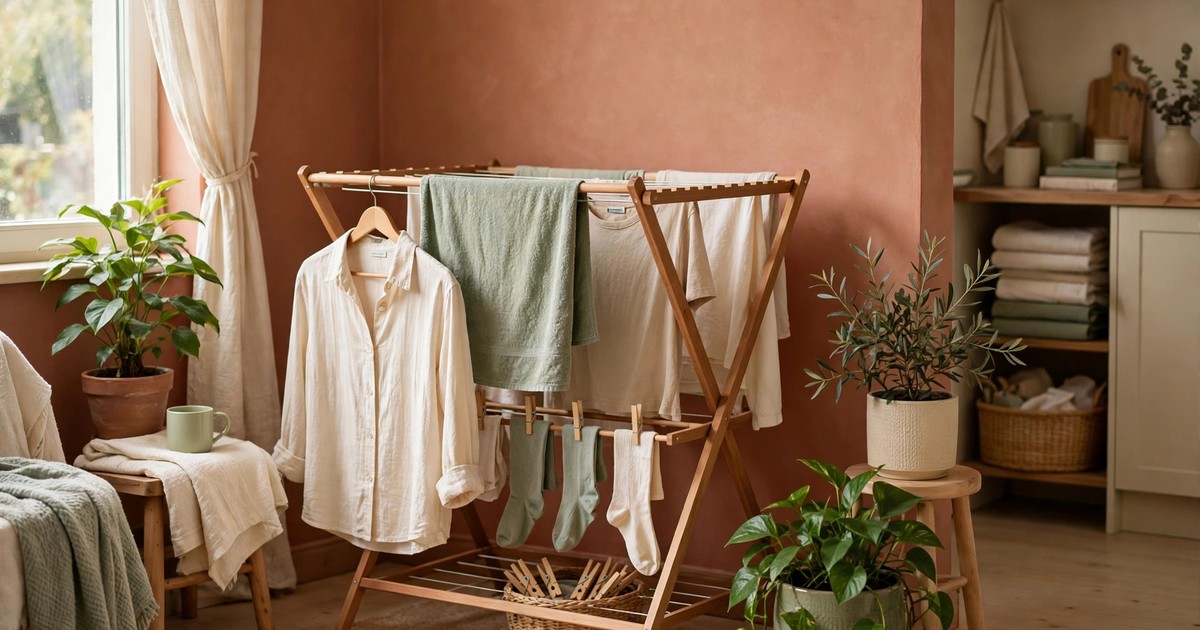
A rack of drying laundry releases a surprising amount of moisture into the air — a full load can add a litre or more — and in a small flat, drying it near your plants turns a chore into plant care. This is a winter-only trick, because in summer you would dry laundry outside, but in winter it is free humidity exactly when plants need it most.
Keep the rack a little distance from the plants so wet fabric does not touch leaves, and make sure the room still gets some ventilation, or you will trade plant humidity for condensation on the windows. If your flat already struggles with damp, dry laundry in a ventilated room and let the plants benefit from the general humidity rather than putting the rack right beside them.
8. Cloches and terrariums for the fussiest plants
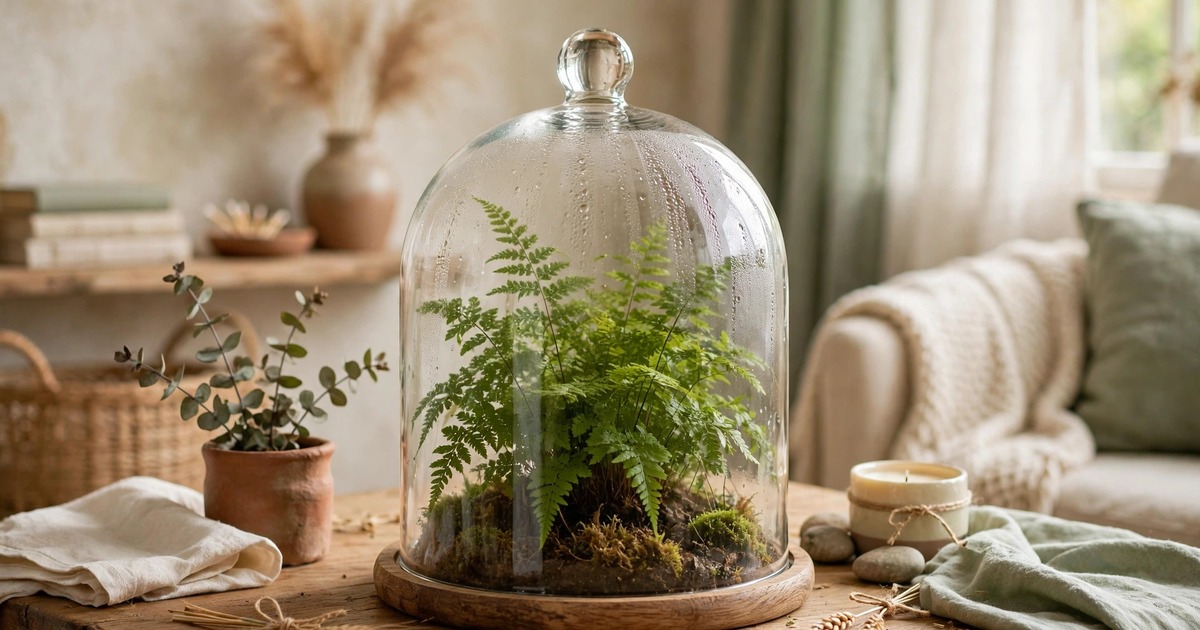
Some plants — maidenhair ferns, fittonias, small calatheas — want humidity so high that no room-level trick will satisfy them. For these, a glass cloche, a bell jar or a closed terrarium creates a sealed microclimate where humidity stays at 70–90%, and the plant thrives in its own little greenhouse.
A cloche is also a beautiful object, which matters in a small flat where every plant display is visible. Lift the cloche for a few minutes every couple of days to let fresh air in, or mould will grow, and keep it out of direct sun — a sealed glass container in sunlight becomes an oven and cooks the plant inside.
9. Double-pot with damp moss
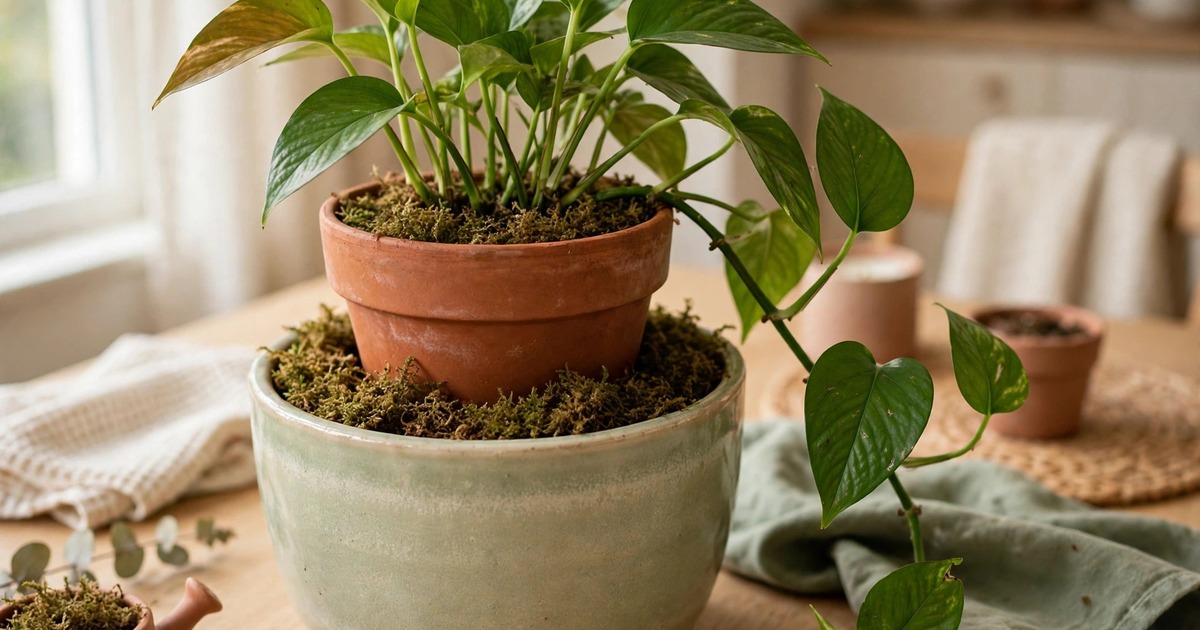
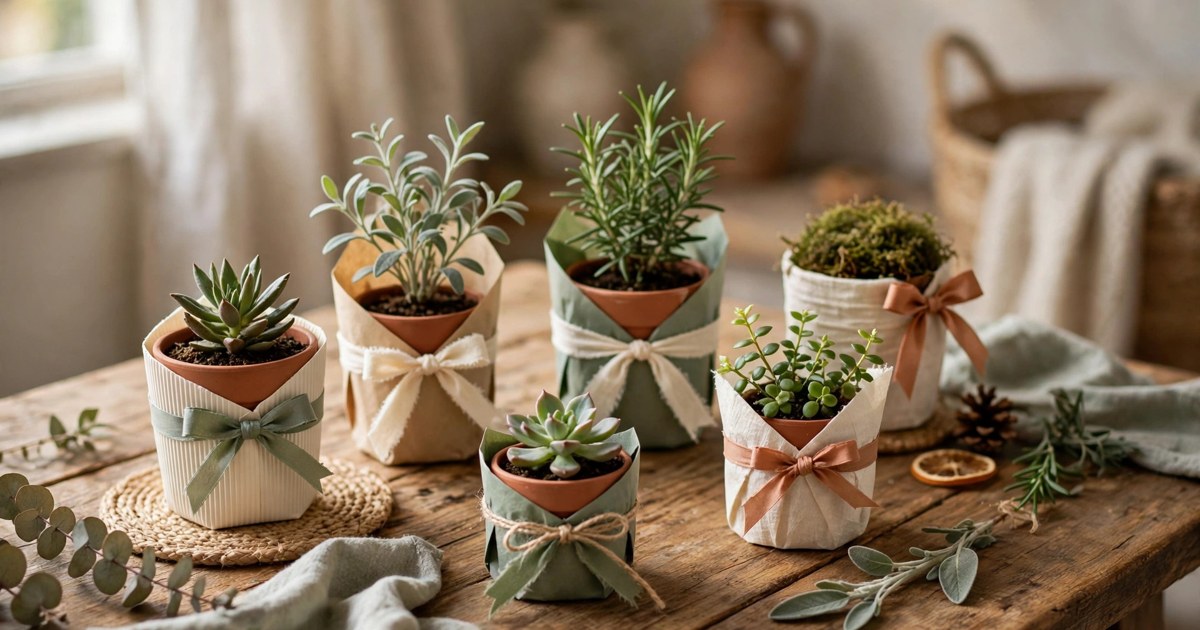
Double-potting means placing the plant's nursery pot inside a larger decorative pot, and filling the gap between them with damp sphagnum moss. The moss evaporates slowly, humidifying the air right around the plant, and it looks wonderful — a moss collar is one of the prettiest plant displays there is.
Keep the moss damp, not soaking, and replace it every few months when it starts to break down. This method works best for plants that like consistently moist air but not wet roots, because the moisture stays outside the inner pot — the plant's soil is never waterlogged by the moss. It is also the most decorative of all the methods here, which makes it a good choice for a plant that sits front and centre in your living room.
Shop this look: humidity without a machine
- Pebble trays for plants — evaporating water right under the leaves. Shop pebble trays
- Continuous mist spray bottle — a fine mist that actually reaches leaves. Shop mist spray bottles
- Indoor hygrometer — know the humidity before guessing. Shop indoor hygrometers
- Tiered plant stands — grouping plants raises local humidity. Shop tiered plant stands
- Soil moisture meter — water when the soil says so, not the calendar. Shop soil moisture meters