The hardest part of decorating with plants at Christmas when you have pets is not finding a festive plant — it is finding one that will not send you to the vet. Poinsettias, amaryllis, lilies, and mistletoe are all on the toxic list for cats and dogs, and they happen to be the plants most shops push hardest in December. But a pet-safe Christmas display is entirely possible, and it does not mean settling for plastic: the nine plants below are all non-toxic to cats and dogs, all look genuinely festive, and all suit a rental, where pots need to be small, light, and easy to move.
A note on "safe": non-toxic means a nibble should not poison your pet, not that eating a whole plant is a good idea. Any plant eaten in quantity can upset a stomach, and a knocked-over pot is a mess whatever is in it. Keep plants stable, keep soil covered where pets dig, and call a vet if your pet eats a large amount of anything unusual — safe plants included.
1. Christmas cactus
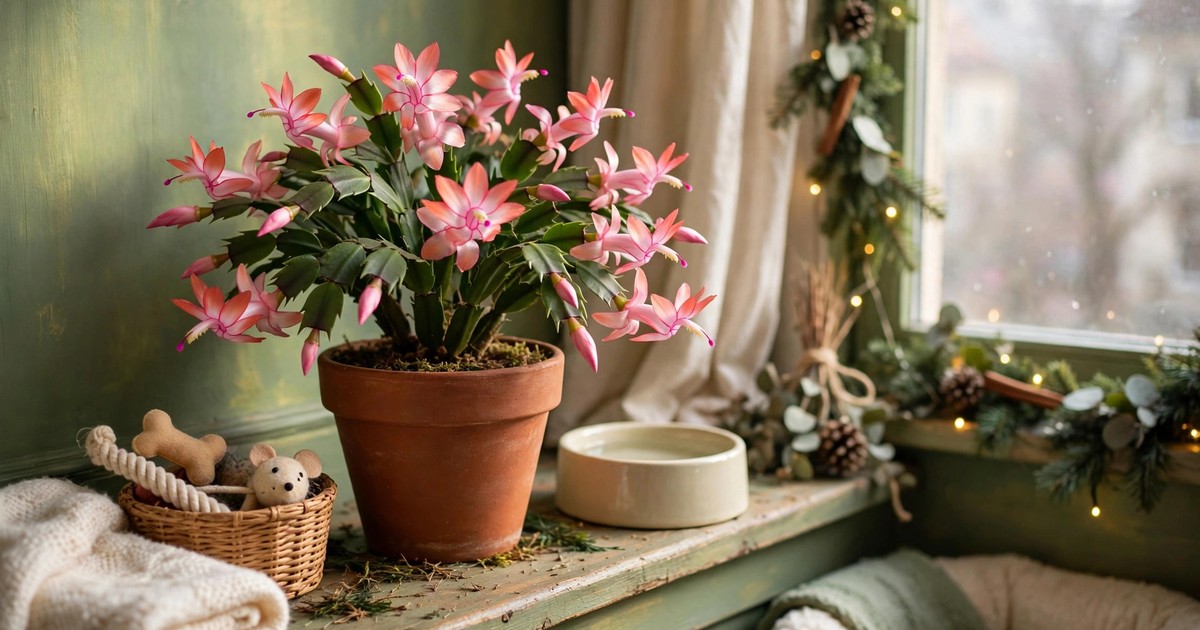
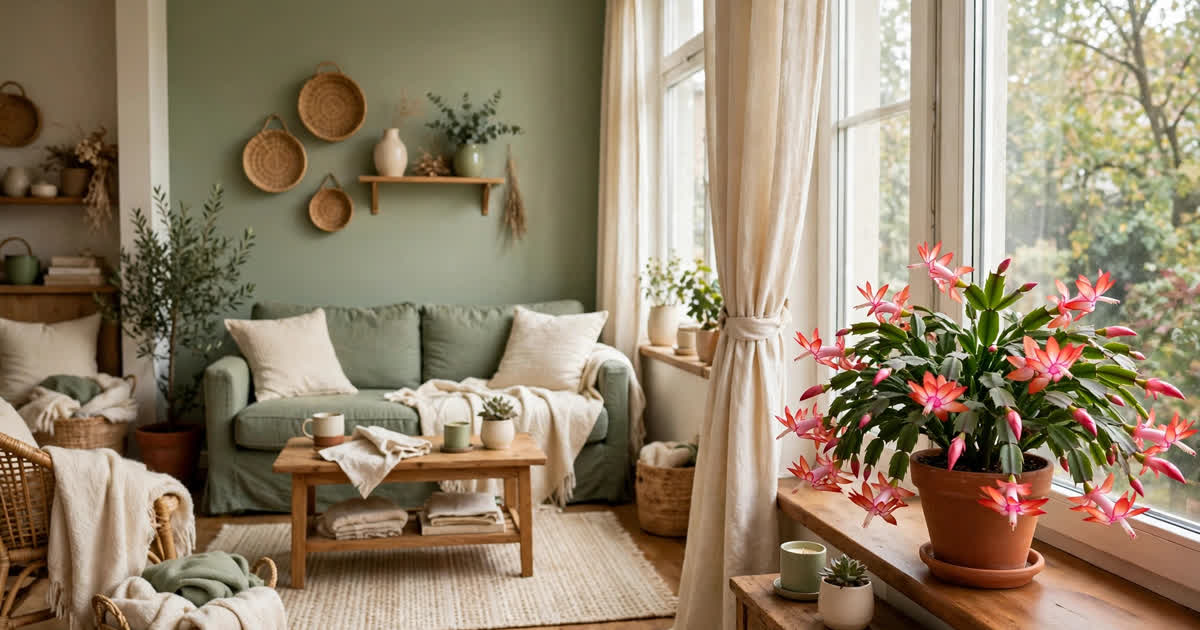
Why it works: the Christmas cactus is the rare plant that is festive, pet-safe, and almost impossible to kill in one package. Its segmented leaves cascade beautifully from a hanging pot or a high shelf, and the pink, red, or white flowers arrive right on cue in December if the plant gets a few weeks of cool nights and shorter days in autumn.
Where it fits: hanging in a window, on a high shelf, or as a table centrepiece where its trailing stems can show. It needs bright indirect light and very little water in winter — overwatering is the main way people kill it. A Christmas cactus also lives for decades, so one plant can become a family tradition rather than a single-season purchase.
2. African violet
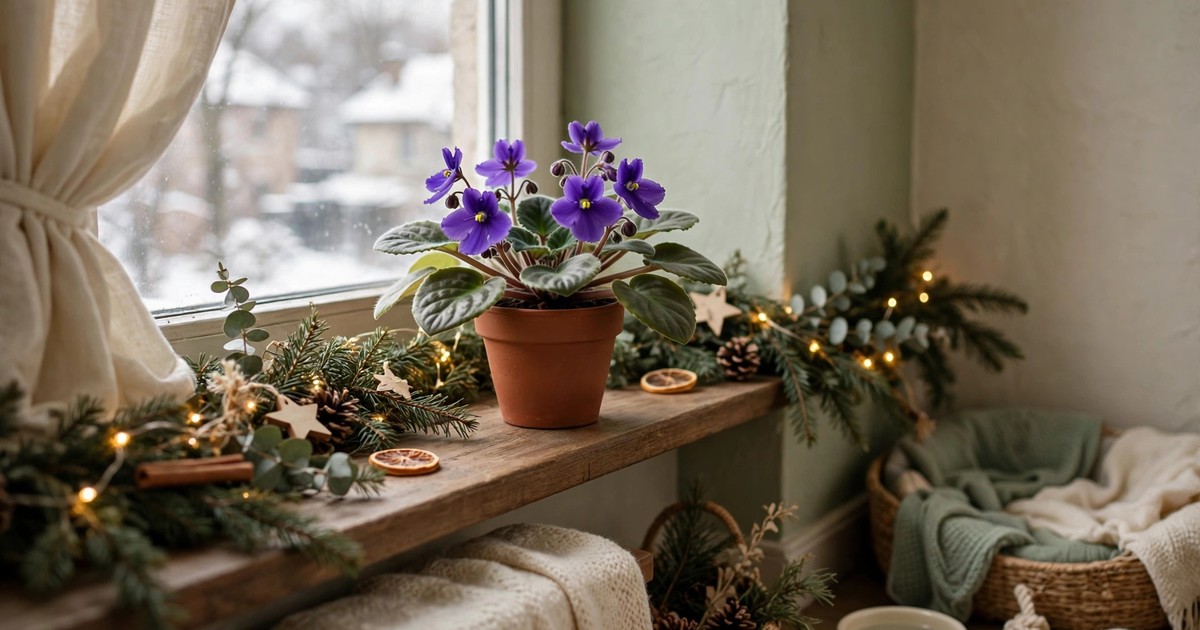
Why it works: African violets flower almost year-round in the right spot, and their velvety leaves and purple, pink, or white blooms bring colour to a windowsill when everything outside is grey. They are compact — a single plant fits a narrow sill — and they are entirely non-toxic to cats and dogs, which makes them one of the safest flowering houseplants you can own.
Where it fits: on a bright windowsill out of direct sun, in a small decorative pot, or grouped in threes for a fuller display. Water from the bottom to keep the leaves dry, and avoid cold draughts, which African violets hate. They are also one of the cheapest festive plants to buy, so a row of them costs less than a single large poinsettia.
3. Boston fern
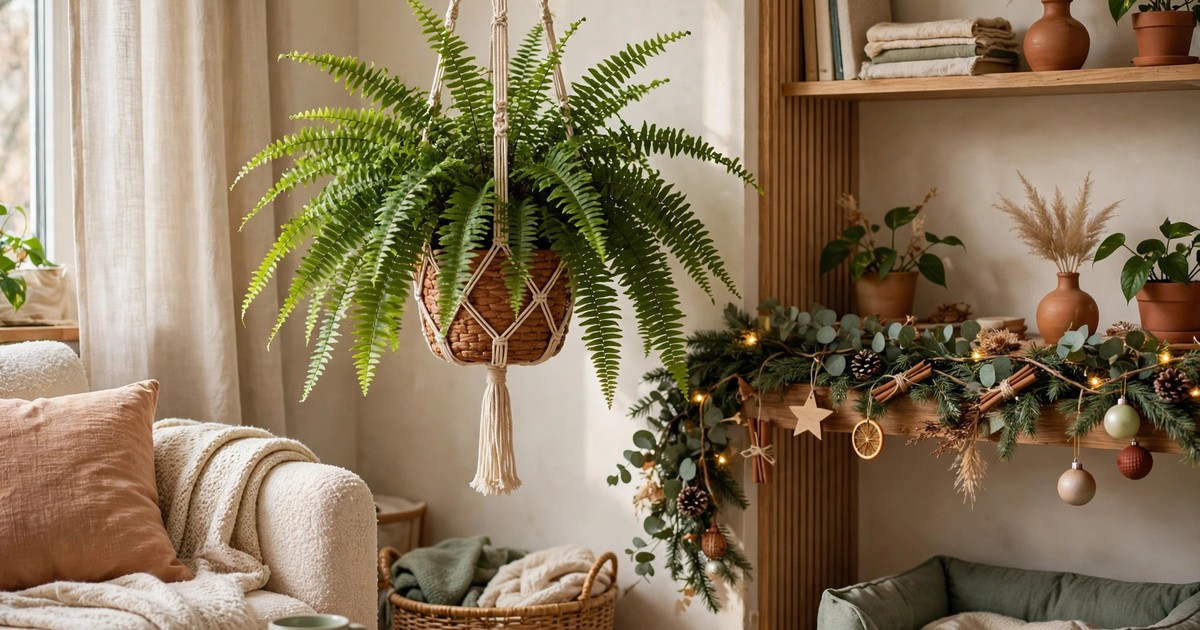
Why it works: a Boston fern is the closest thing to a living Christmas garland — lush, green, arching fronds that soften any room and look instantly festive with a few baubles tucked in or a string of fairy lights draped over the top. Ferns are non-toxic, they humidify the air slightly, and they fill a corner that would otherwise sit empty.
Where it fits: hanging in a basket, on a plant stand in a corner, or on top of a bookshelf where the fronds can trail. Boston ferns like humidity and indirect light, so a bathroom windowsill or a spot near (not on) a radiator works well. Mist occasionally in a heated winter home, and trim brown fronds as they appear.
4. Peperomia
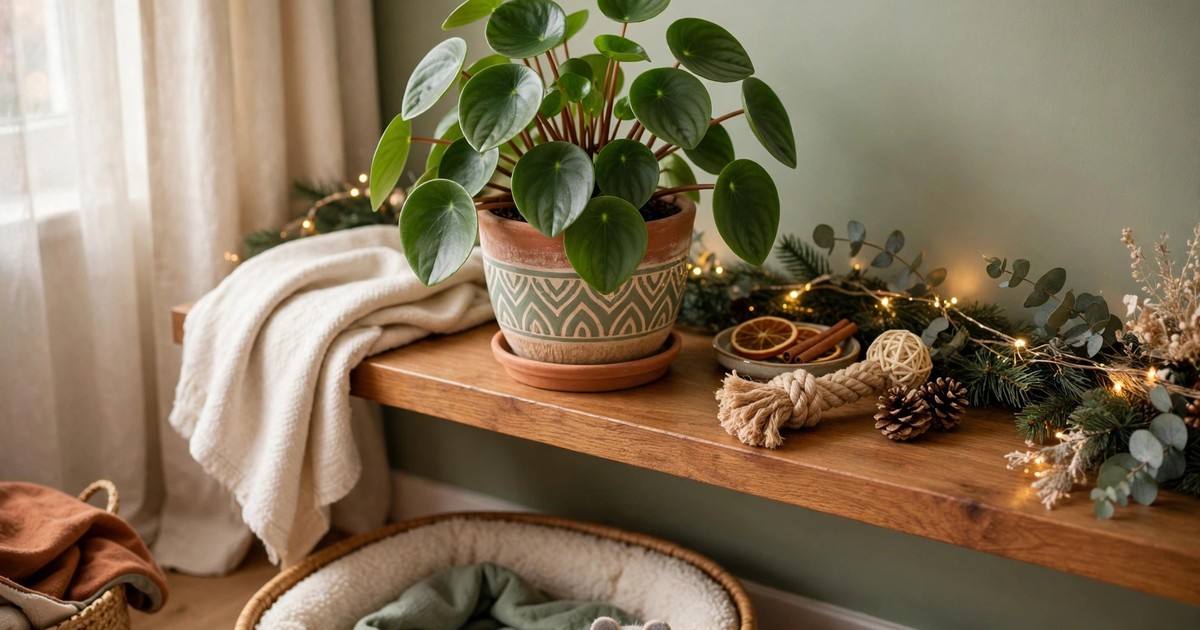
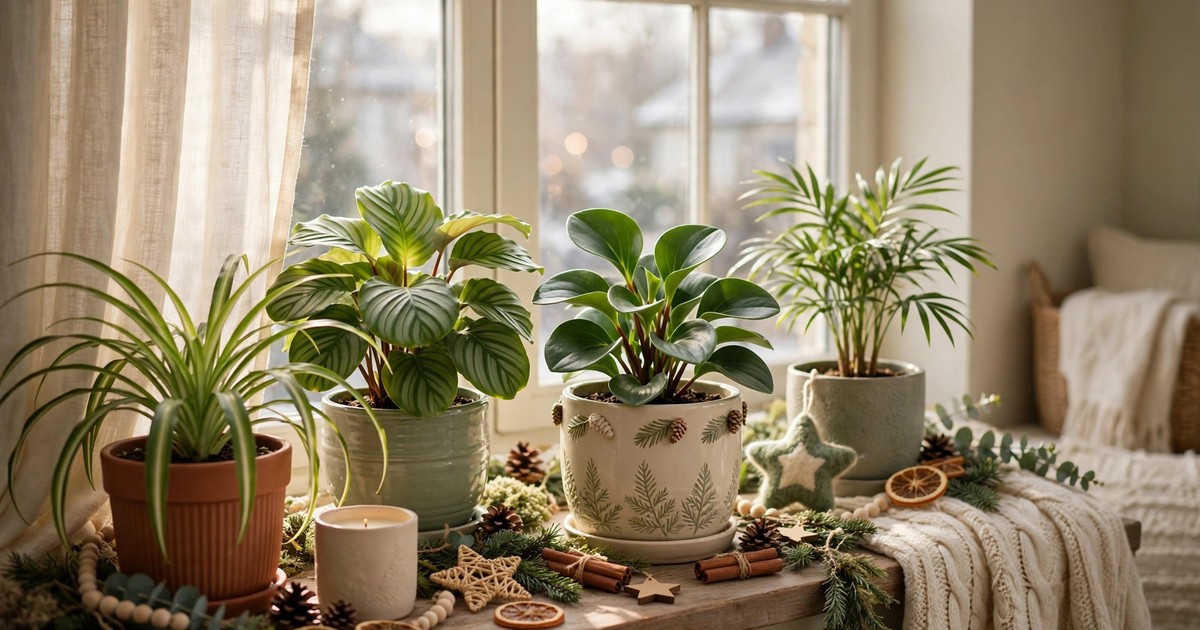
Why it works: peperomias come in dozens of varieties — round leaves, watermelon stripes, rippled textures — and all of them are pet-safe, compact, and forgiving of the low light and irregular watering that define real apartment life. A peperomia in a festive pot, perhaps red or gold, reads as a Christmas plant without needing flowers at all.
Where it fits: on a desk, a shelf, or a side table where a small plant is needed. Peperomias stay small, so they suit tiny windowsills and crowded desks, and they tolerate the dry air of a heated flat better than most tropical plants. They are also easy to propagate from a leaf cutting, so one plant can become gifts for friends.
5. Calathea
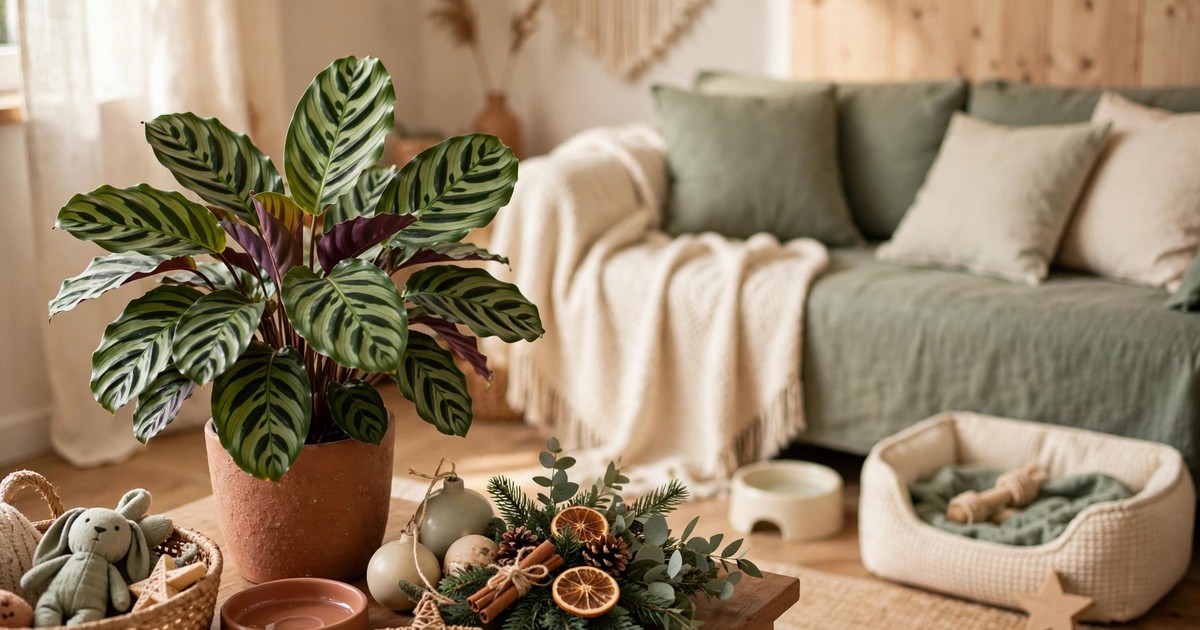
Why it works: calatheas are the drama queens of the pet-safe plant world — boldly patterned leaves in greens, creams, and purples that look painted, and leaves that fold up at night like hands in prayer. They bring the visual interest of a patterned textile to a room, and they are completely non-toxic, which matters when a cat treats every new leaf as a toy.
Where it fits: as a feature plant on a side table or plant stand, where the pattern can be admired up close. Calatheas like humidity and indirect light and dislike tap water chemicals, so use filtered or rested water if your leaves develop brown edges. They are a little fussier than the other plants here, but the pattern pays for the effort.
6. Spider plant
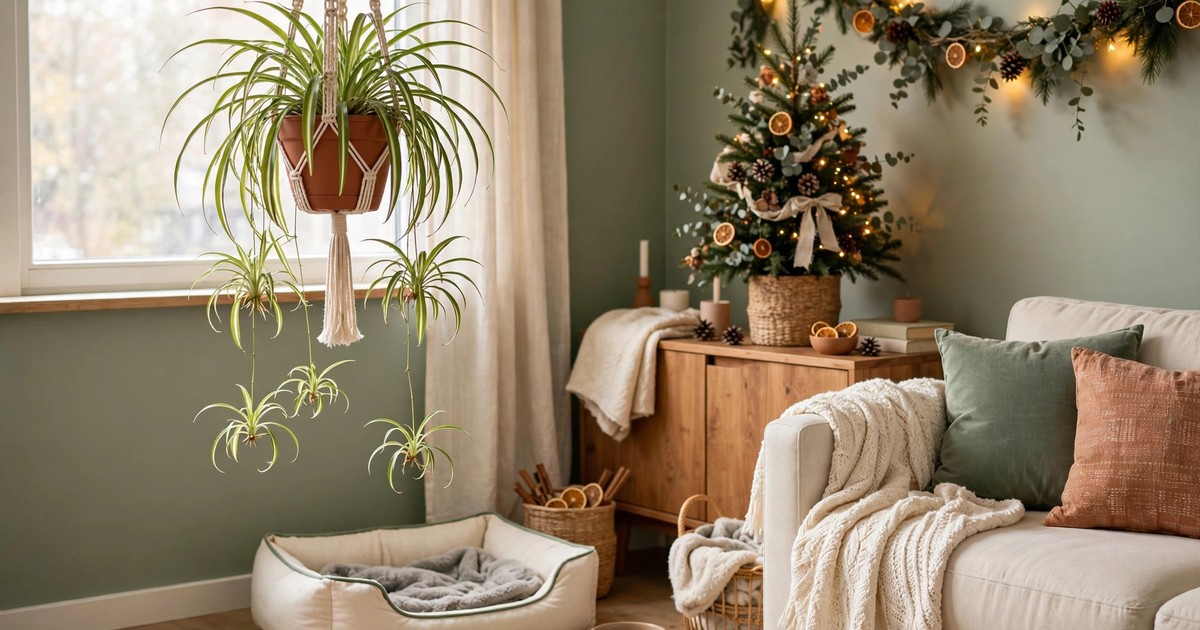
Why it works: the spider plant is the classic pet-safe houseplant for a reason: it is non-toxic, it grows fast, it tolerates neglect, and its arching leaves with trailing plantlets look festive with minimal effort — add a red pot and a ribbon and it is a Christmas plant. Cats famously love batting at the trailing plantlets, and since the plant is safe, the game is harmless.
Where it fits: hanging in a window, on a high shelf where the plantlets can trail, or on a plant stand. Spider plants handle low light and missed waterings, making them ideal for a first plant or a busy household. The plantlets can be potted up as gifts, which is a nice December tradition in itself.
7. Orchid (moth orchid)
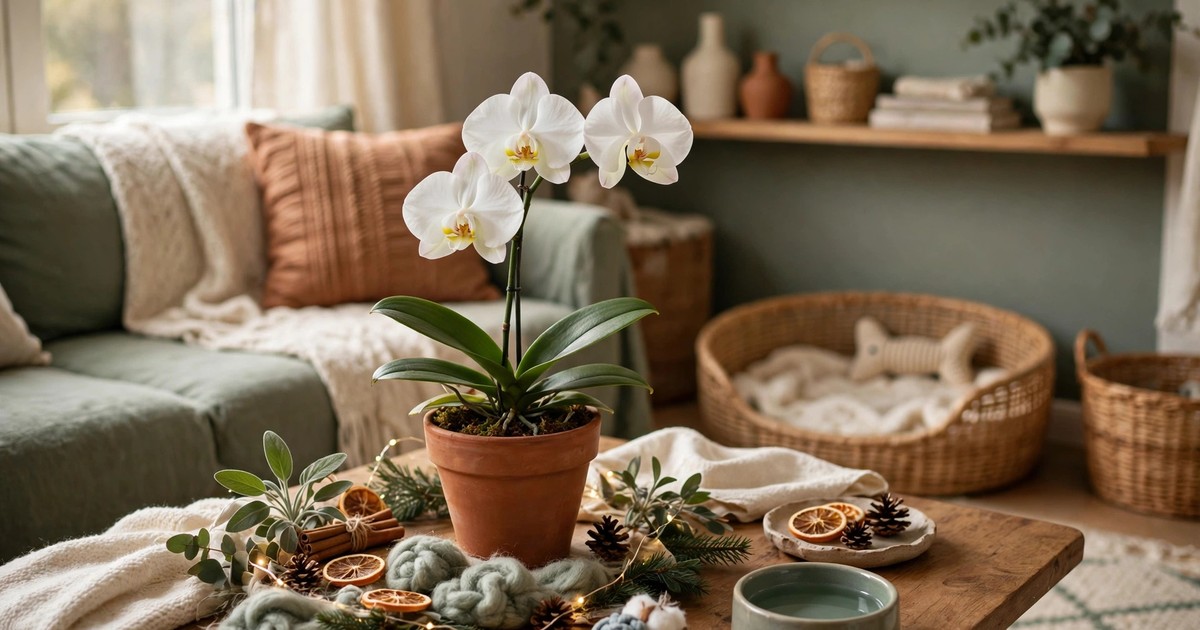
Why it works: a moth orchid in bloom is the most elegant Christmas plant on this list — tall stems, waxy white or pink flowers that last for months, and a silhouette that suits a minimal or modern festive scheme far better than a bushy poinsettia. Orchids are non-toxic to cats and dogs, and a single stem in a simple pot looks expensive without costing much.
Where it fits: as a centrepiece on a dining table, on a console, or beside the tree where its height echoes the tree's shape. Give it bright indirect light, water sparingly when the bark is dry, and do not move it once it is blooming. A white orchid with a gold ribbon around the pot is a complete Christmas decoration on its own.
8. Rosemary, grown as a mini tree
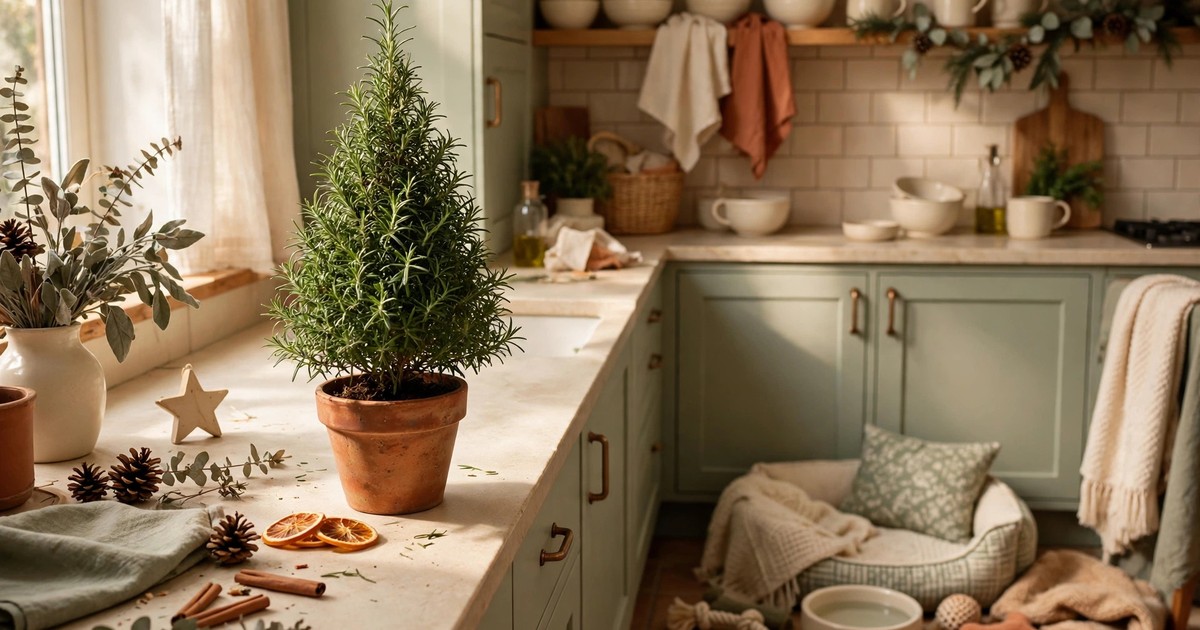
Why it works: a rosemary plant trimmed into a cone is the cleverest Christmas plant there is — it looks like a miniature tree, it smells wonderful, it is pet-safe, and after Christmas it goes back to being a kitchen herb you can cook with. No other plant on this list earns its keep in January quite like rosemary does.
Where it fits: on a kitchen windowsill, a dining table, or an entryway console. Rosemary needs bright light and well-drained soil, and it dislikes wet feet, so water only when the soil is dry. Decorate it with a few tiny baubles and a star on top, and keep it away from radiators, which dry it out fast.
9. Norfolk Island pine
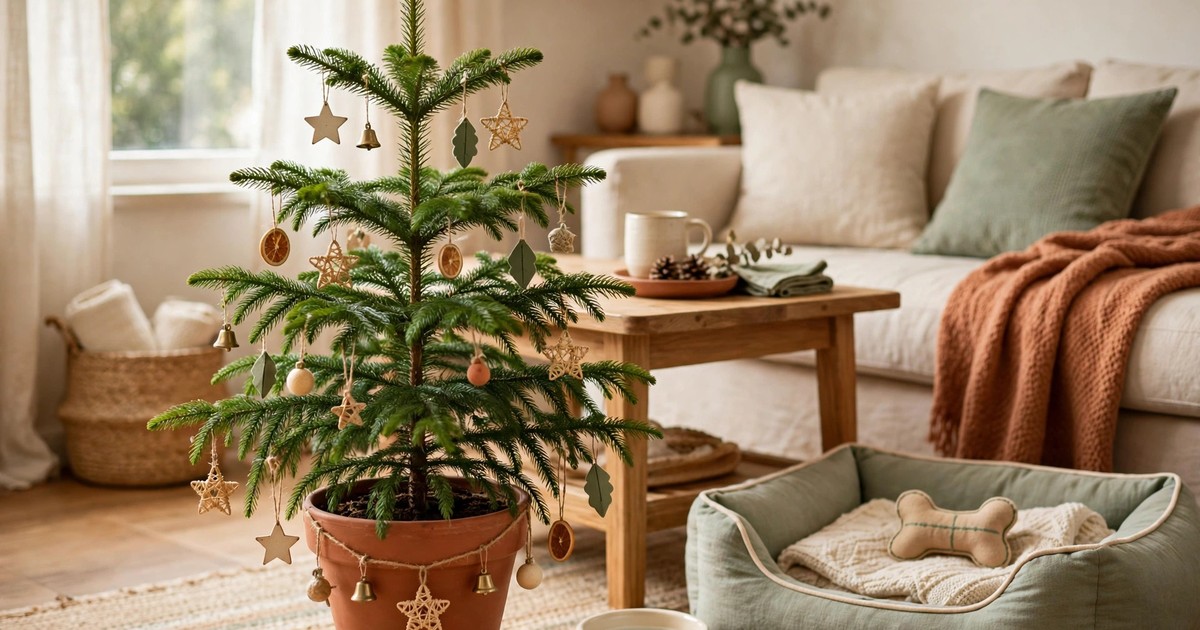
Why it works: the Norfolk Island pine is a living mini Christmas tree — soft, feathery branches in perfect tiers, a natural conical shape, and a size that suits an apartment where a full tree will not fit. It is non-toxic to pets, unlike many true pines treated with preservatives, and it lives for years, growing slowly into a proper houseplant.
Where it fits: on the floor in a corner, on a table as a tabletop tree, or as the main tree in a small apartment. Decorate it lightly — a few small baubles and a string of fairy lights — and keep it in bright indirect light with regular watering. After Christmas, remove the decorations and it is simply a beautiful houseplant until next December.
Plants to keep out of reach instead
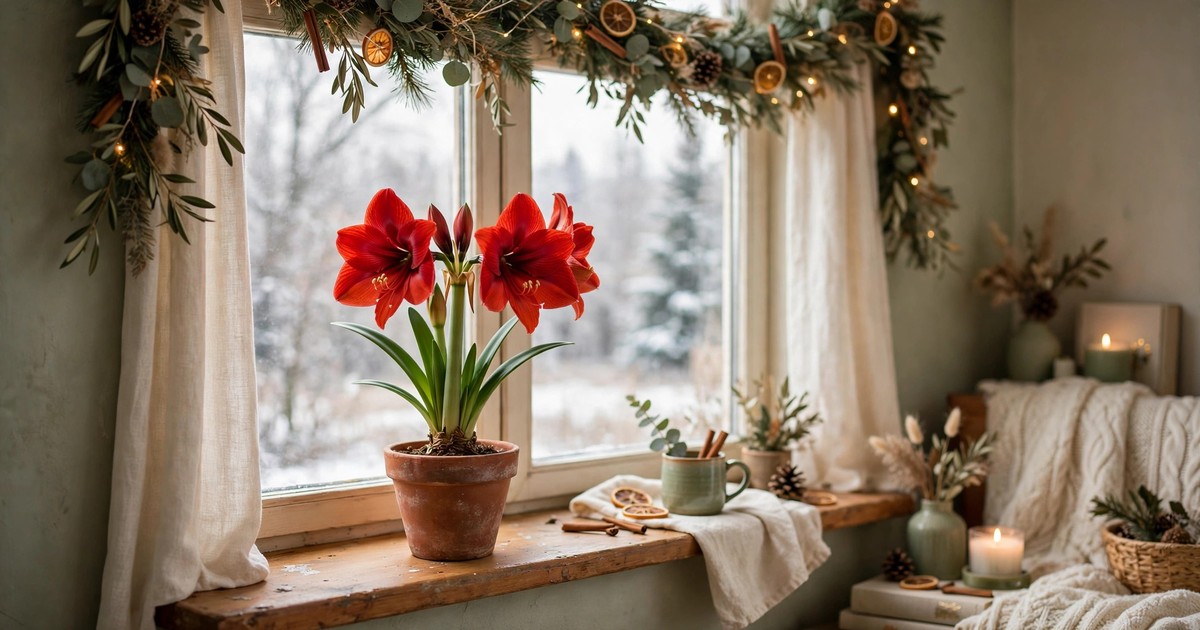
Not every festive favourite is safe, and knowing the short danger list matters as much as knowing the safe list. Poinsettias cause vomiting and drooling in cats and dogs; amaryllis bulbs are toxic if chewed; lilies are extremely dangerous for cats, even the pollen; mistletoe berries are toxic; and holly berries cause stomach upset. If you love one of these, display it high, behind a barrier, or choose a faux version — and keep the vet's number handy through the holidays.