Christmas and pets are a combination that tests both your decorations and your deposit. A cat sees a tree as a climbing frame, a dog sees a low-hanging bauble as a toy, and both see tinsel, cords, and chocolate ornaments as things to investigate with their mouths. In a rental, the stakes are higher than in a home you own: a toppled tree can scratch a floor, a chewed cord can damage an appliance, and a stained carpet can come out of your deposit. The good news is that pet-proofing Christmas decor needs no drilling, no permanent changes, and no giving up on a festive home — it just needs a plan made before the boxes come out of storage.
Start by thinking like your pet for ten minutes. What is at nose height? What dangles, sparkles, or swings? What smells interesting? The answers are your risk list, and every step below addresses one of them. Do the structural steps first — tree, cords, and placement — and the rest becomes much easier.
Step 1: Anchor the tree without drilling a hole
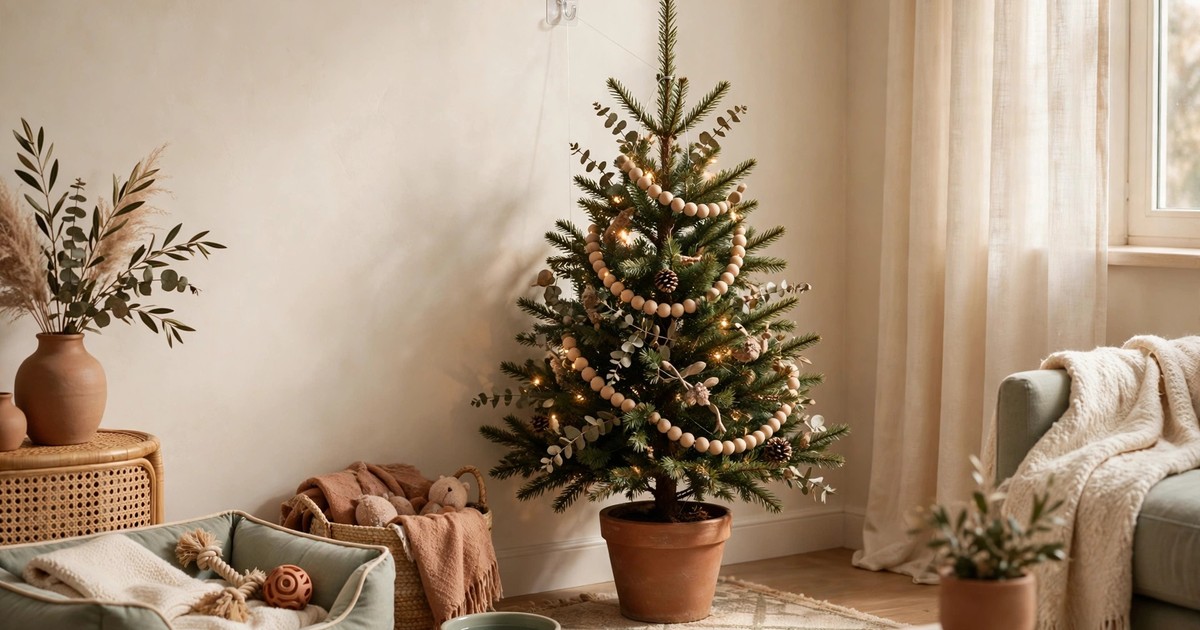
Tie the top third of the tree to the wall with clear fishing line looped around the trunk and hooked over a removable adhesive hook rated for several kilos. The line is invisible from across the room, the hook peels off in January, and a cat launching itself at the tree meets resistance instead of a free fall. For a tabletop tree, use museum putty under the base — it holds the tree to the table through a bump but peels away cleanly.
Place the tree in a corner if you can, so it has two walls behind it and only one direction to fall. Keep it away from furniture your pet uses as a launchpad: a cat that can jump from a sofa arm to the middle of the tree will, and no anchor survives a determined leap from above. A corner tree with a clear landing zone around it is the single best pet-proofing move you can make.
Step 2: Put a barrier between pets and the lower branches
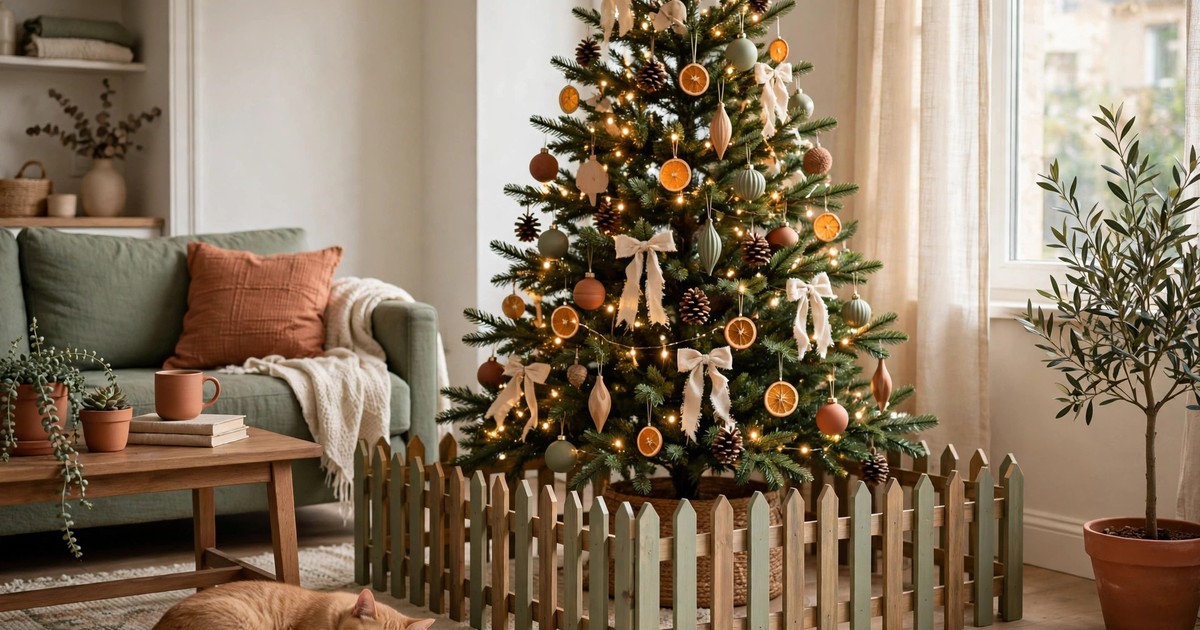
A low decorative fence, a ring of large wrapped empty boxes, or a tree collar that extends outward all create a buffer zone around the base. Pets step over or around barriers less readily than they walk straight up to a tree, and the buffer keeps tails, paws, and noses away from the lowest branches where the most fragile ornaments usually hang.
The trick is to make the barrier look like decor, not a pen. A wooden picket-style tree fence, a circle of kraft-wrapped boxes, or a chunky woven tree skirt all read as intentional Christmas styling. Avoid baby gates unless you genuinely need one — they look institutional and they block your own access to the tree for watering and present placement.
Step 3: Hang fragile ornaments high and shatterproof ones low
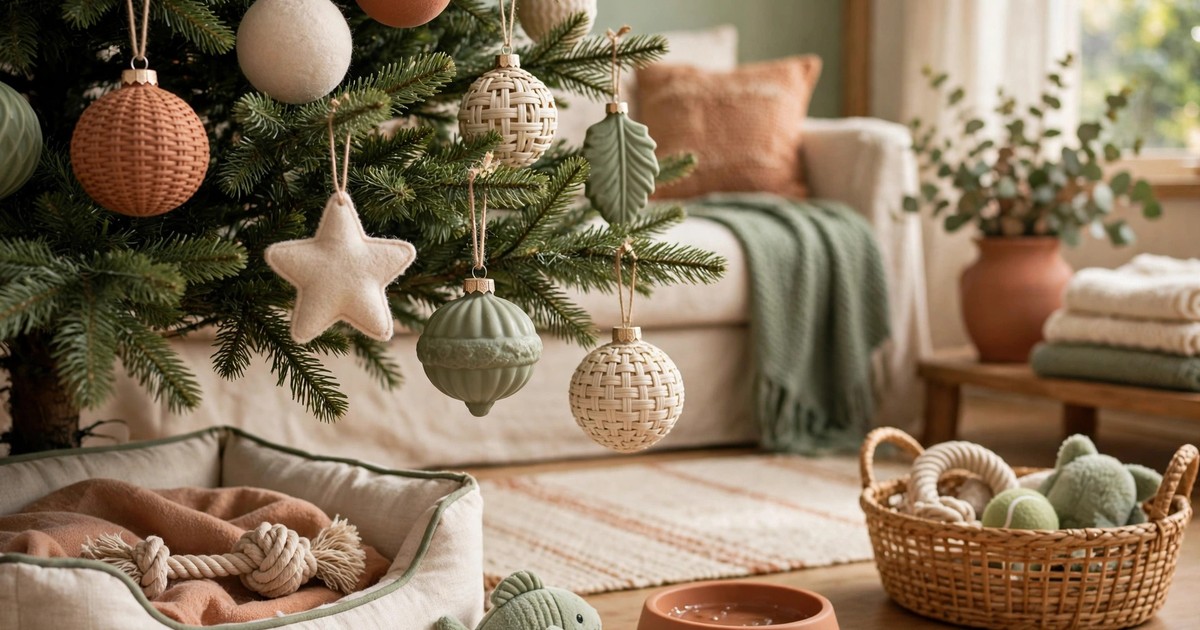
Divide your ornaments into two sets before you decorate: fragile and shatterproof. Glass, ceramic, and heirloom ornaments go on the top two-thirds of the tree, out of tail and paw range. The bottom third gets plastic, wood, felt, and fabric ornaments — the ones that bounce rather than break when batted off a branch.
Hang ornaments with short wire hooks twisted closed around the branch, not open hooks that slide off at the first touch. A bauble that stays on the branch is a bauble your pet cannot eat, and a bauble that falls is a vet visit waiting to happen. Keep count of your fragile ornaments as you hang them, so a missing one at the end of the season is noticed rather than discovered by a pet later.
Step 4: Hide and protect every cord
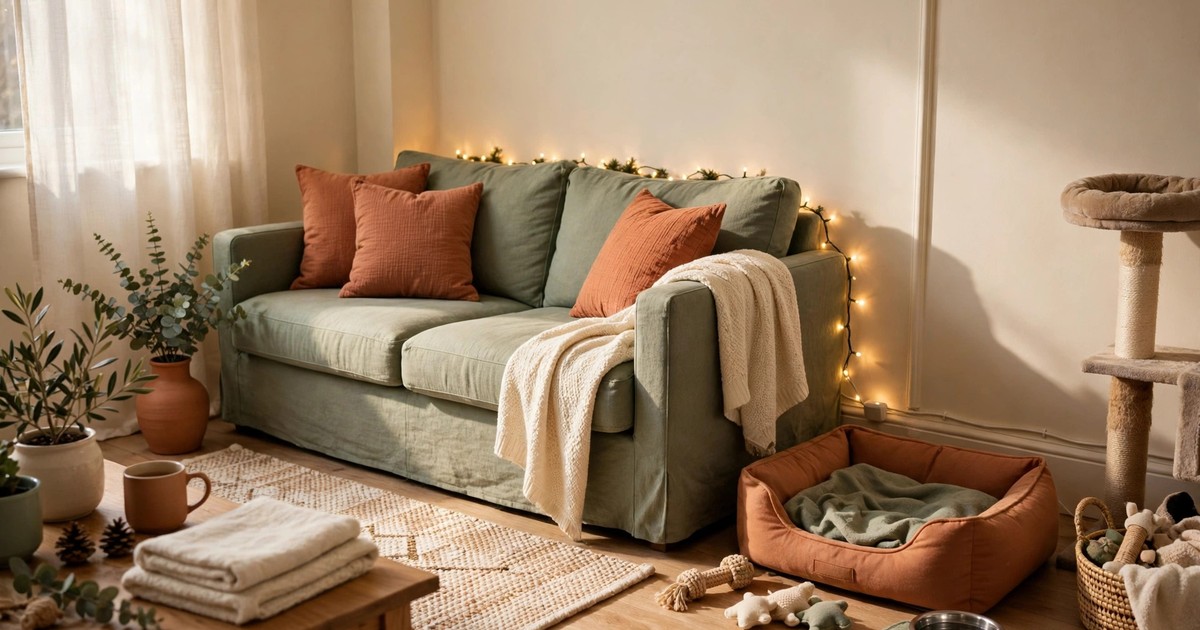
Light cords, extension leads, and charger cables for animated decorations are a chewing hazard and a tripping hazard, and a chewed cord can short an appliance or shock a pet. Run cords behind furniture, under rugs, or through adhesive cord covers that stick to skirting boards and peel off in January. Battery-operated lights on wreaths and garlands remove the cord problem entirely for smaller displays.
Use a cord cover or a cable box for the power strip itself — pets that chew cords often start with the warm, humming box on the floor. Unplug animated decorations when you are out, and check cords weekly for tooth marks, since damage that looks cosmetic can expose live wire. This step protects your deposit too: a scorched socket or a damaged appliance is a landlord conversation nobody wants.
Step 5: Skip tinsel, angel hair, and ribbon garlands at pet height
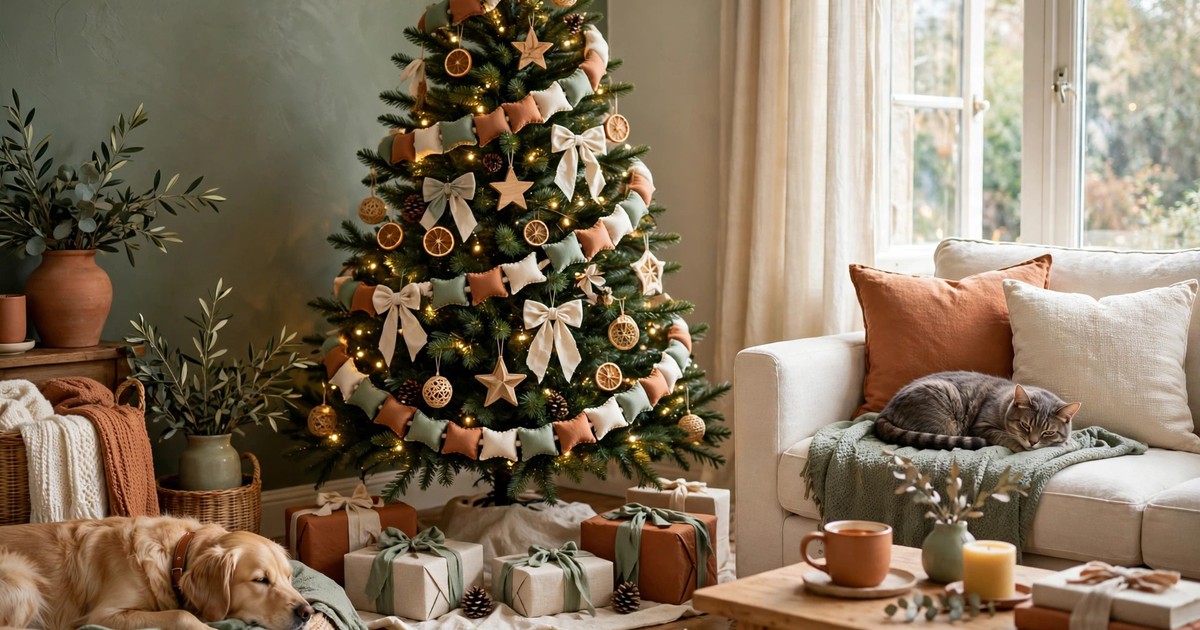
Tinsel, angel hair, and thin ribbon are among the most dangerous Christmas decorations for pets, because swallowed strands can cause intestinal blockages that need surgery. Cats are especially drawn to tinsel's shimmer and movement. The safe swap is simple: use fabric garlands, wooden bead garlands, or dried orange slices instead — all of them look festive, none of them unravel into a hazard.
If you love tinsel, keep it on the top half of the tree only, well above jumping range, and vacuum the floor under the tree regularly so fallen strands do not linger. The same rule applies to ribbon curls on presents: keep wrapped gifts with ribbon out of reach until Christmas morning, and clear wrapping paper and ribbon the moment presents are opened.
Step 6: Choose pet-safe plants and keep toxic ones out of reach
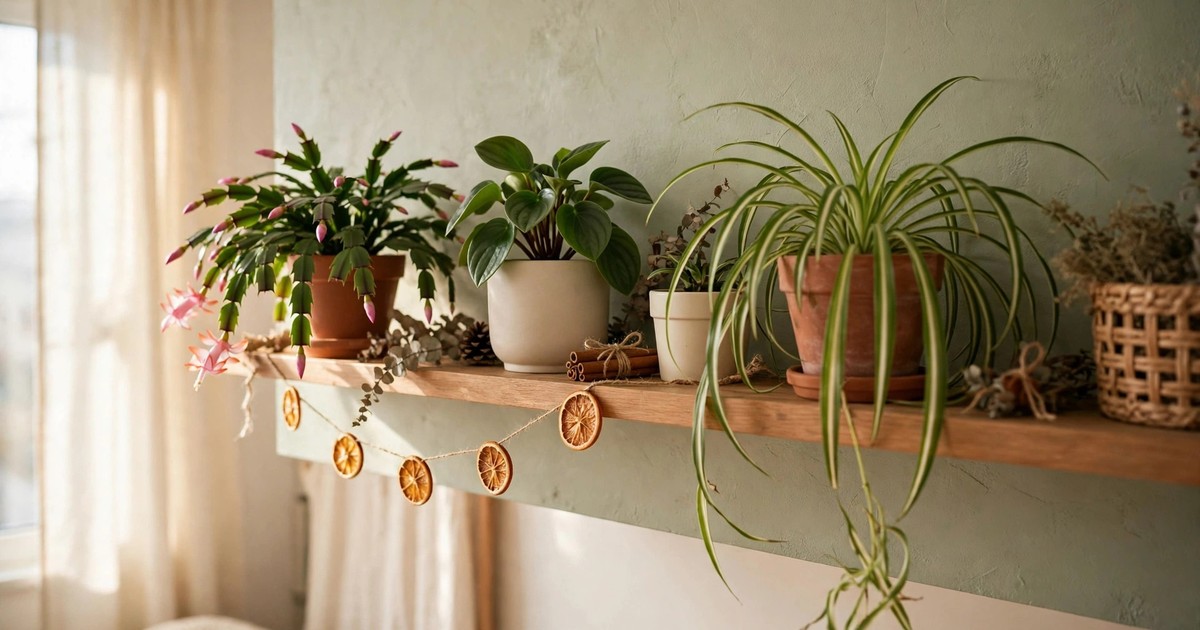
Poinsettias, amaryllis, lilies, and mistletoe are all toxic to cats and dogs to varying degrees, and a curious pet will test them. The simplest pet-proofing move is to choose pet-safe plants instead — and if you already own a toxic favourite, put it on a high shelf, hang it from the ceiling, or keep it in a room your pet does not enter.
Mistletoe deserves special care because it is traditionally hung in doorways at pet nose height. Hang it high, or swap it for a faux version that looks identical from below. Check every plant you bring home against a pet-toxicity list before it crosses the threshold, not after your pet has had a nibble, and keep the number of a vet or poison helpline saved in your phone through December.
Step 7: Make the tree water inaccessible
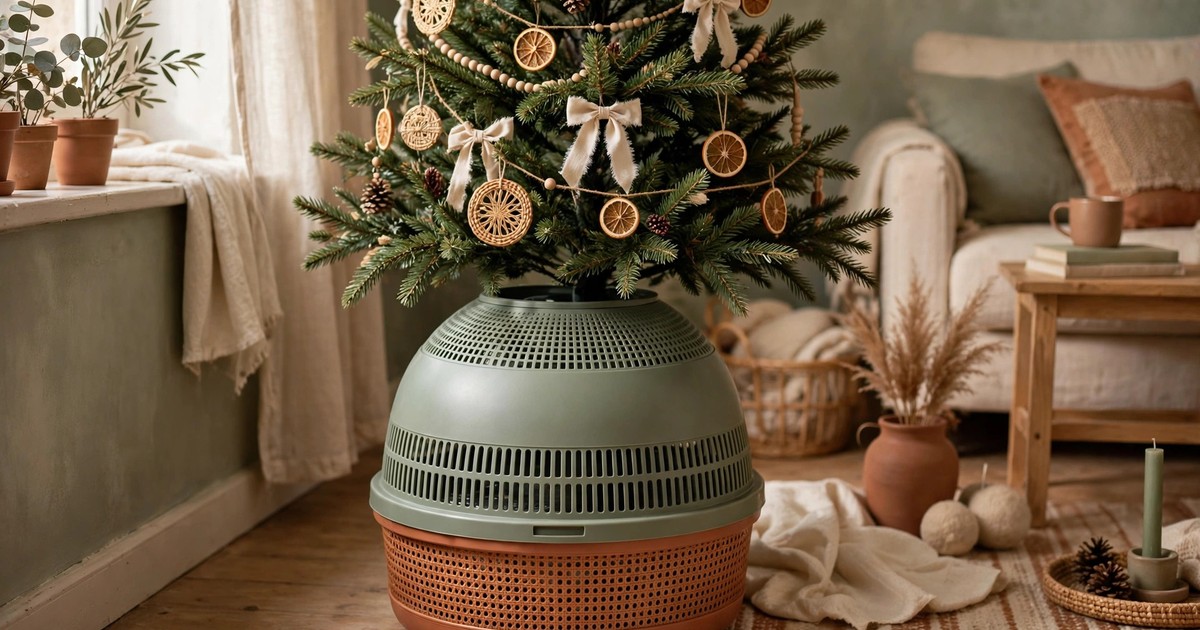
Real-tree stand water often contains sap, preservatives, and bacteria, and pets will drink it given the chance — a covered stand or a tree skirt that drapes over the reservoir solves the problem. A tree collar with a solid base works even better, since it hides the stand entirely and looks like a deliberate design choice.
Change the water every couple of days and top it up daily, since a dry tree is a fire risk as well as a shedding nuisance. If your pet is a persistent drinker, a small screen or a ring of boxes around the base (see step 2) does double duty here, keeping both paws and tongues away from the water.
Step 8: Give your pet their own Christmas distraction
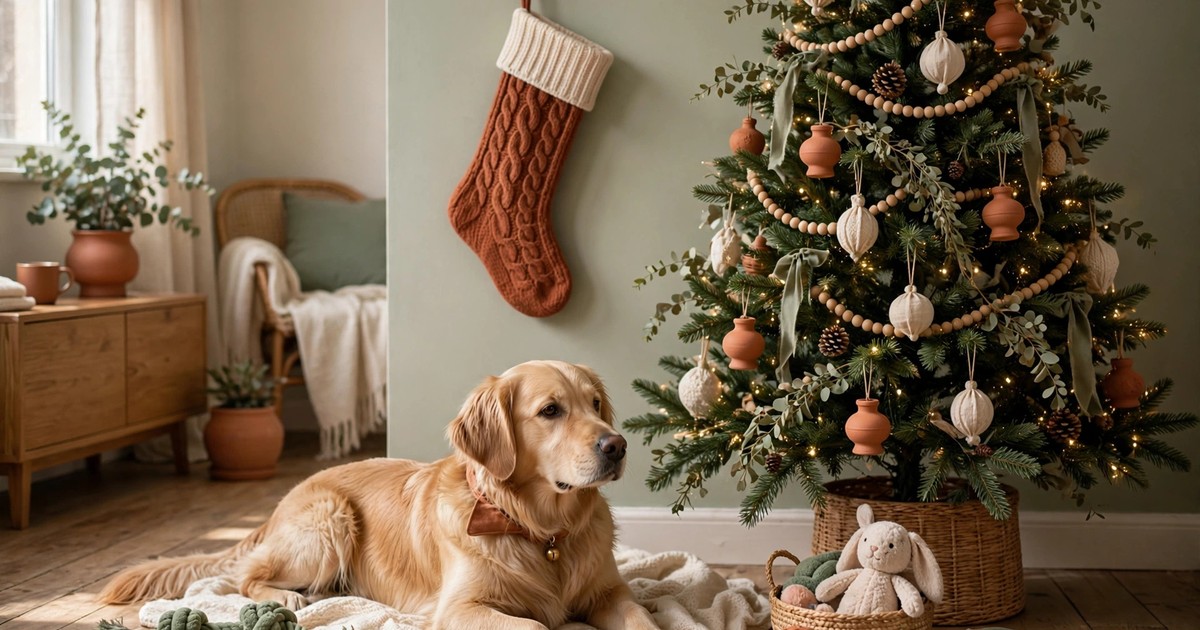
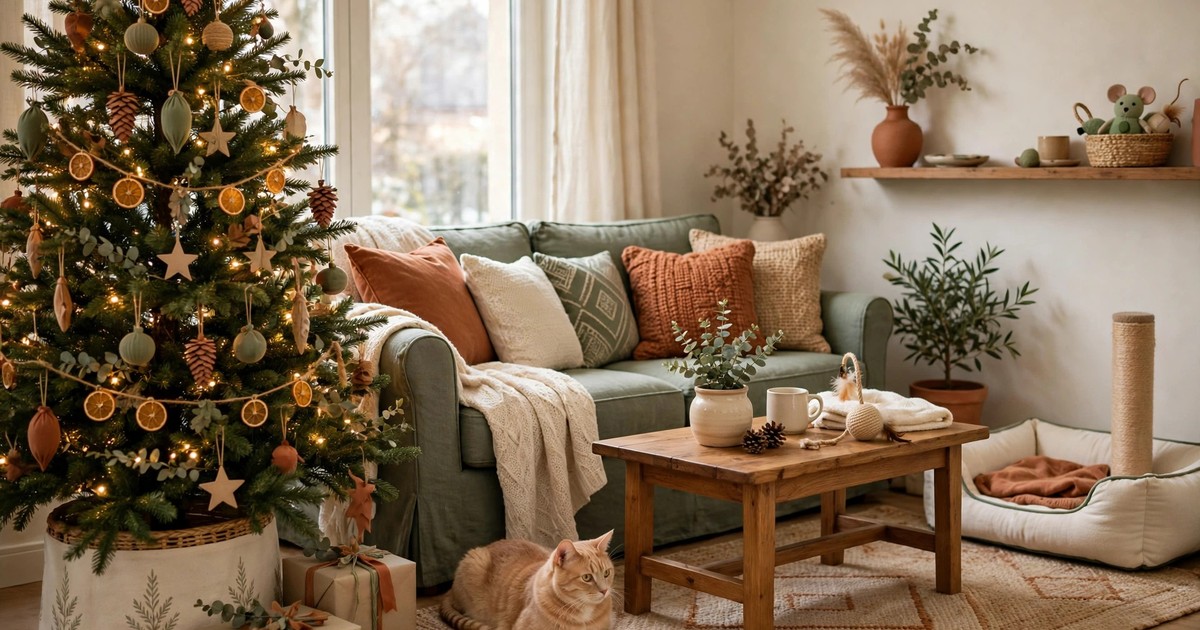
A pet that has its own exciting thing is far less interested in yours. A new scratching post near the tree, a puzzle feeder, a long-lasting chew, or a pet stocking filled with treats gives your pet a Christmas job that does not involve your ornaments. Place the distraction near — but not under — the tree, so the pet's territory overlaps the festive area without centring on the decorations.
This is also the kindest step in the guide: Christmas changes a pet's home dramatically, with new smells, new objects, and disrupted routines, and a familiar toy or a new treat helps them settle. A calm pet is a pet that leaves the tree alone, and a pet that has been played with before decorating time is calmer still — tire them out first, decorate second.
Step 9: Do a nightly five-minute safety sweep
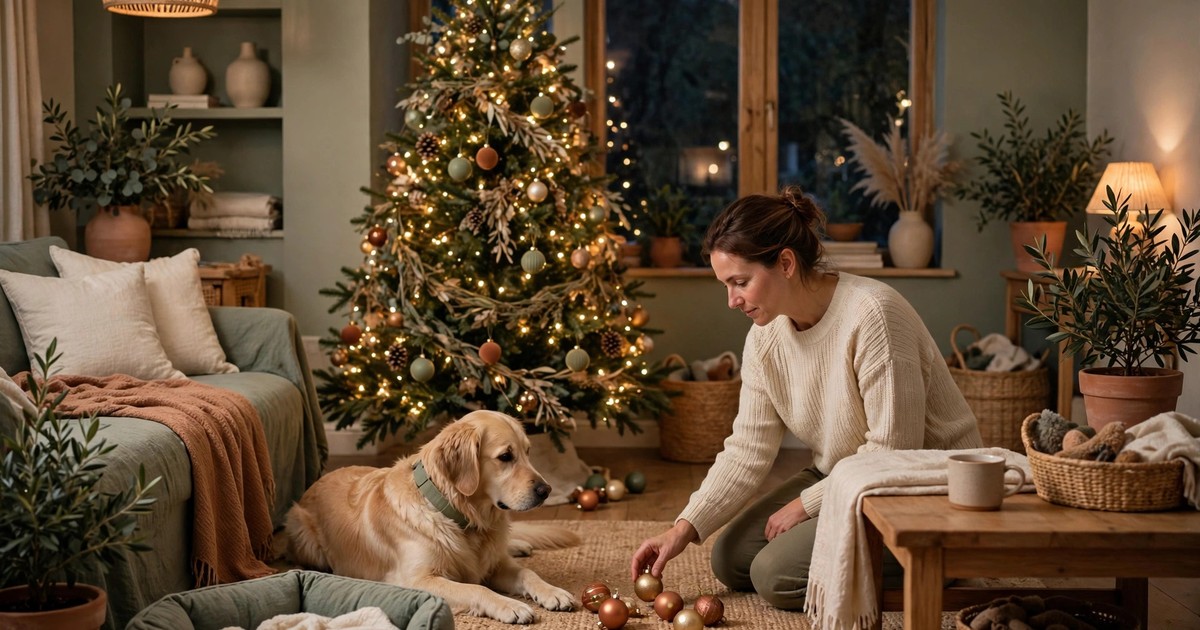
Once a day, ideally before bed, walk the decorated rooms and check for fallen ornaments, loose hooks, chewed cords, knocked plants, and spilled tree water. Pick up anything on the floor, re-hang anything dangling, and unplug anything you will not supervise overnight. Five minutes prevents the overnight incident — the chewed cord, the eaten ornament, the tipped plant — that causes real damage.
Keep a small box by the tree for recovered ornaments and hooks, so the sweep is quick and the pieces are not lost. At the end of the season, pack the pet-proofing kit — fishing line, adhesive hooks, cord covers, museum putty — together with the decorations, so next December starts safe instead of starting from scratch.
You may also like

How to Take Down Holiday Decor in a Rental Without Losing Your Deposit
October 28, 2026
10 Ways to Store Christmas Decor in a Rental With Almost No Storage Space
October 28, 2026