
Christmas with a baby or toddler is magical, and it is also a full-contact sport. Everything you hang, plug in, or place on a low table will be touched, pulled, tasted, or climbed. In a rental, that curiosity comes with a second worry: a toppled tree can scratch a wooden floor, a yanked garland can peel paint, and a stained rug can come straight out of your deposit. The good news is that child-proofing Christmas decor does not mean a bare, boring home, and it does not mean drilling holes or making permanent changes. It means planning like a toddler for one afternoon, then decorating around what you find.
Start by getting down to toddler height and looking around the room. What dangles? What sparkles? What can be reached from a sofa, a stool, or a toy box pushed against the wall? Those are your risk points, and this guide works through them one by one. Every fix below is renter-friendly and budget-first: removable adhesive hooks, tension rods, museum putty, cord covers, and swaps that cost little or nothing. Do the structural steps first — the tree, the cords, and the placement — and the rest of your decorating becomes much easier and much calmer.
1. Anchor the tree without drilling a single hole
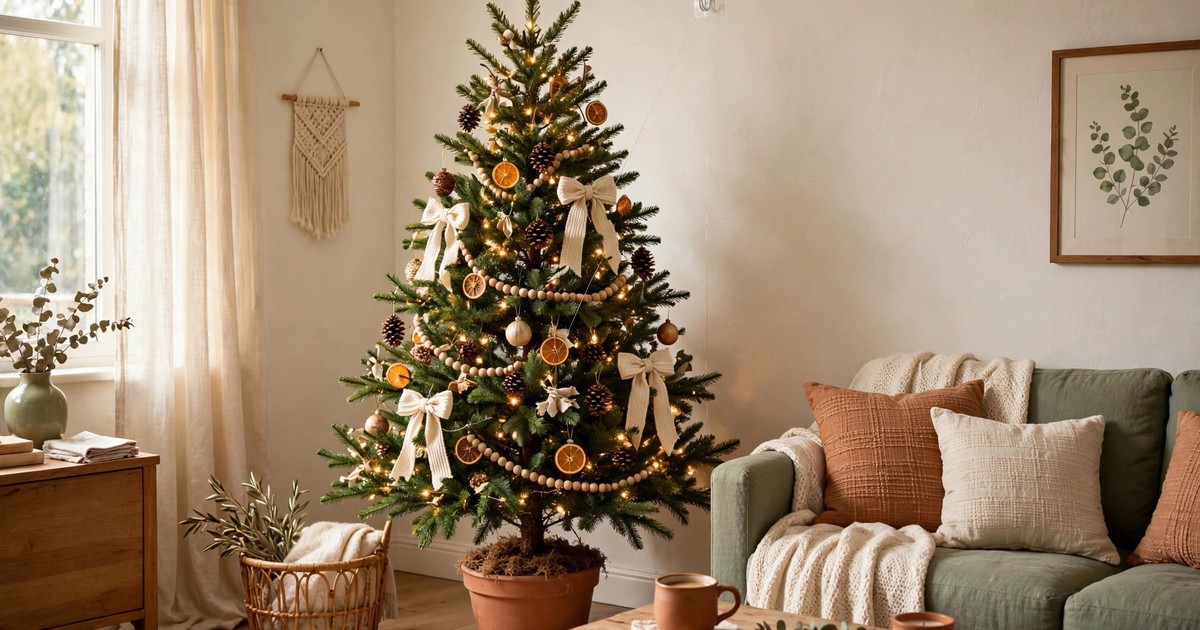
A toddler pulling up on a low branch can bring a whole tree down, so anchoring is the first job, not an afterthought. Tie the top third of the trunk to the wall with clear fishing line, looped around the trunk and hooked over a removable adhesive hook rated for several kilos. The line is almost invisible from across the room, the hook peels off cleanly in January, and a determined tug meets resistance instead of a free fall. For a tabletop tree, a few blobs of museum putty under the base hold it steady through a bump while peeling away without a mark.
Place the tree in a corner where two walls sit behind it, and move climbable furniture away from it. A toddler who can step from a sofa arm or a toy storage bench onto the tree will try, and no anchor is meant to survive that kind of launch. A corner tree with a clear zone around it, a heavy or weighted base, and a skirt that hides the stand gives you the safest starting point in the whole house.
2. Go shatterproof on the lower branches

Divide your ornaments before you decorate: fragile things go high, unbreakable things go low. Glass, ceramic, and heirloom ornaments belong on the top two-thirds of the tree, well above small hands. The bottom third — the toddler zone — gets plastic, wood, felt, and fabric ornaments that bounce, squash, or swing rather than shatter. A toddler can pull a felt star off a branch a dozen times and the only consequence is that you hang it back up.
Hang low ornaments with short wire hooks twisted closed around the branch, not open hooks that slide off at the first tug. Closed hooks keep ornaments on the tree and out of small mouths, and they stop the daily scatter of baubles across the floor. Keep your prettiest fragile pieces for the top of the tree, a high shelf, or a window display, where you can enjoy them without guarding them all December.
3. Hide every cord and battery pack

Light cords, extension leads, and the battery packs for animated decorations are a triple hazard: a chewing risk, a tripping risk, and a pulling risk, since one good yank can bring a whole display down. Run cords behind furniture, under rugs, or through adhesive cord covers that stick to skirting boards and peel off in January. Battery-operated lights remove the cord problem entirely for wreaths, garlands, and small displays, and they are often cheaper than buying extra extension leads.
Put power strips inside a cord box or behind a heavy piece of furniture, and tape battery-pack doors shut or choose packs with screw-closed covers. Toddlers are surprisingly good at opening small compartments, and button batteries are one of the few Christmas hazards that needs a genuinely urgent response. Unplug animated decorations when you leave the room, and check cords weekly for tooth marks or fraying, since damage that looks cosmetic can still be dangerous.
4. Keep fragile displays up high and stable

Not every decoration belongs at toddler height, and the kindest solution for fragile pieces is to move them up rather than ban them. A village scene, a nativity set, or a collection of glass ornaments looks wonderful on a high shelf, a mantel, or the top of a bookcase, where it can be admired without being grabbed. Use museum putty under anything that could be knocked by a bump to the furniture, and keep displays away from the very edge of the shelf.
Think about stability as well as height. A wobbly side table with a ceramic display is a hazard even if it is not at floor level, because a toddler pushing a toy into the table leg can shake the whole thing. Anchor tall bookcases to the wall with a tension or adhesive solution if your lease allows it, or simply move fragile displays to furniture that sits flat against the wall. High, stable, and puttied down is the rule for anything you would be upset to lose.
5. Choose child-safe plants and skip the toxic ones
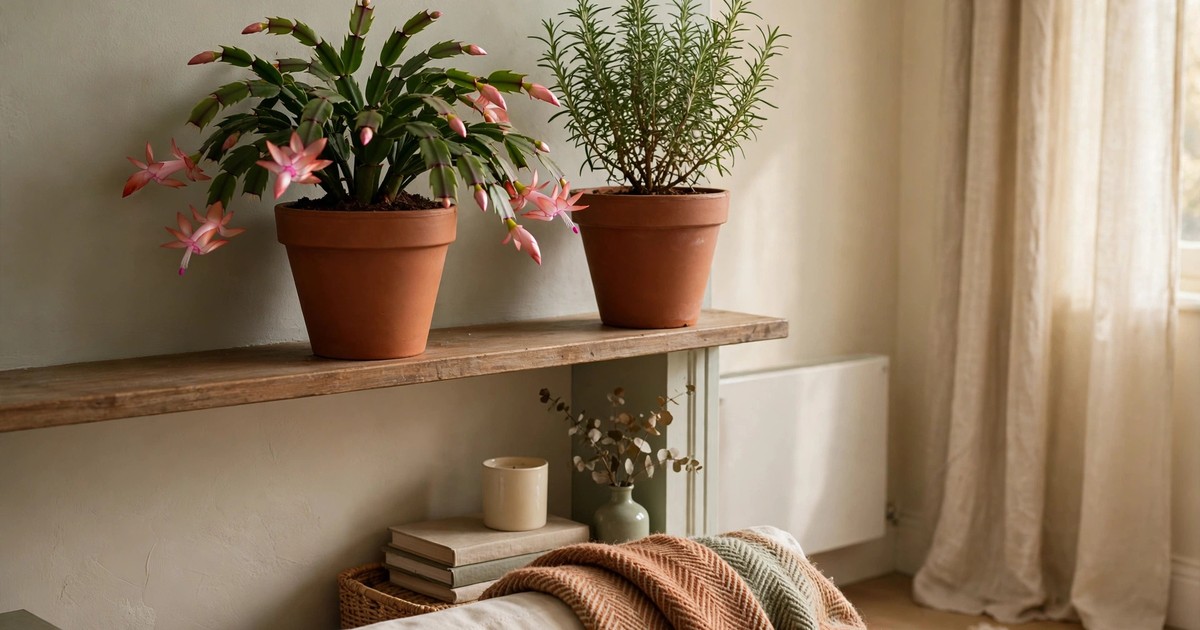
Many classic Christmas plants are not toddler-friendly. Poinsettias can irritate the mouth and stomach, mistletoe berries and holly berries are toxic, and amaryllis bulbs are dangerous if chewed. The simplest fix is to choose safe plants instead: Christmas cactus, rosemary, Norfolk Island pine, and most orchids are far kinder choices, and they look just as festive in a terracotta pot with a ribbon around it.
If you already own a plant you love that is not child-safe, put it high, hang it, or keep it in a room your toddler does not enter. Mistletoe deserves special care because tradition hangs it in doorways at exactly toddler height — hang it high or swap it for a faux version that looks the same from below. Check every plant before it crosses the threshold, not after a curious taste, and keep your local poison helpline number saved in your phone through December.
6. Make the fireplace and candles flameless
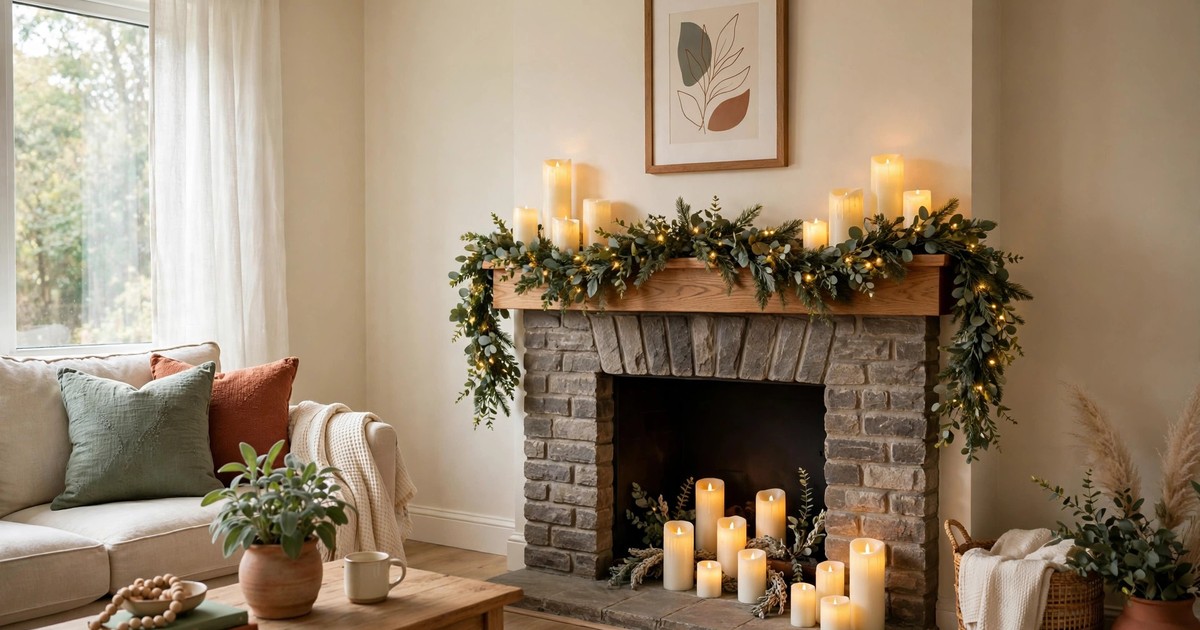
Real flames and toddlers do not mix, and in a rental an open flame near a garland, a stocking, or a curtain is a deposit risk as well as a safety risk. Swap every real candle for a flameless LED candle: the flickering versions look convincing from across the room, they can sit inside lanterns and hurricanes, and they can stay on during dinner without anyone watching them. Battery-operated fairy lights inside the fireplace opening give you a warm glow with no heat at all.
Use a fireplace screen or a tension-mounted hearth gate if your fireplace is at floor level and accessible, and keep matches and lighters completely out of the decorated rooms. The same rule applies to the kitchen: simmer pots and scented wax warmers smell wonderful, but they belong on a high counter, behind a stove guard, or not at all during the toddler years. Flameless everywhere is a simple rule that removes a whole category of worry.
7. Create a yes-space under and around the tree
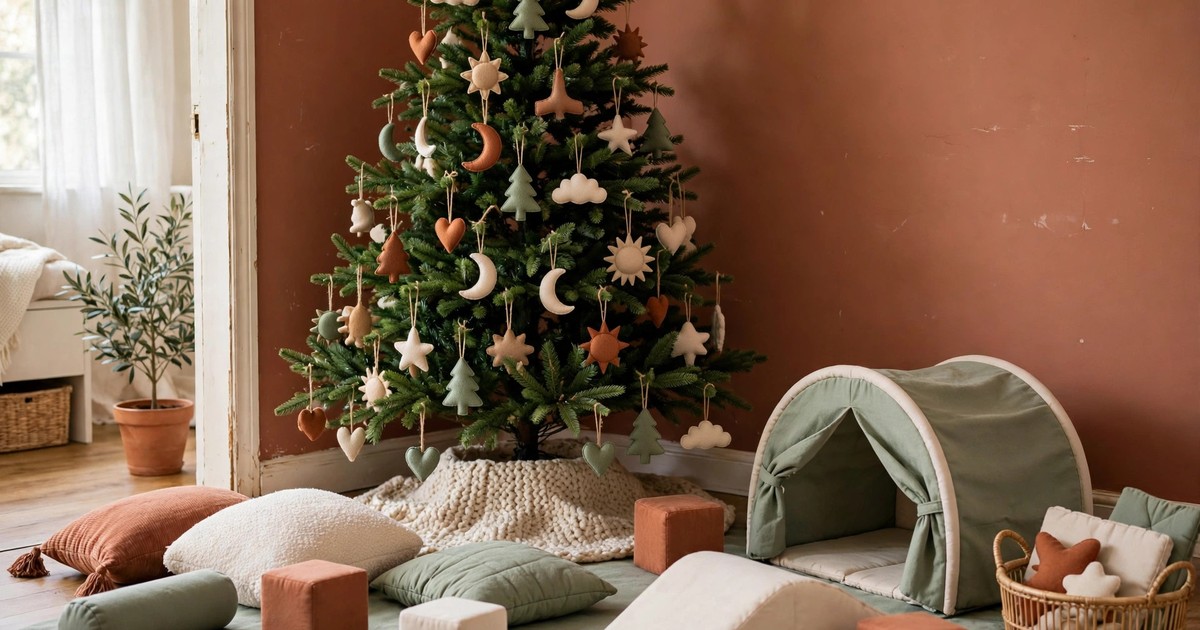
Toddlers do not stay away from the tree just because you ask them to, so give them a part of it that is theirs. A soft rug or play mat under and around the tree, a chunky woven tree skirt, and a few toddler-safe ornaments they are allowed to touch turns the tree from forbidden fruit into a shared space. Felt ornaments, soft fabric stars, and unbreakable baubles hung at toddler height give small hands something to explore without breaking anything.
This yes-space works best when it is comfortable and clearly theirs: a cushion to sit on, a couple of board books or quiet toys nearby, and a small basket for ornaments that fall off. Toddlers who have their own ornaments to rearrange are far less interested in the fragile ones higher up, and you spend less of December saying no. It also protects your floor, since a padded mat under the tree catches dropped ornaments, spilled water, and pine needles before they reach the rug or wood below.
8. Plan a calm, damage-free takedown
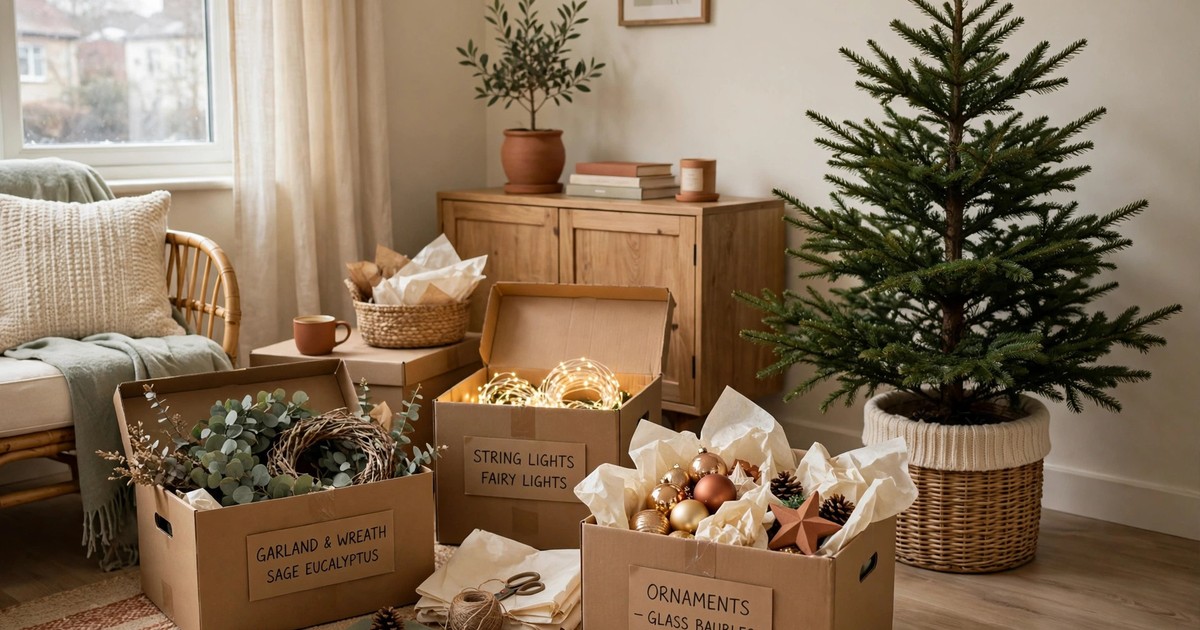
Takedown day is when most rental damage happens, because tired adults pull hooks off walls, drag trees across floors, and stuff decorations into boxes in a hurry. Plan it instead: remove adhesive hooks slowly, following the manufacturer's instructions, and warm any stubborn ones with a hairdryer on a low setting before peeling. Bag ornaments by zone — shatterproof low ornaments together, fragile high ones wrapped separately — so next December starts organised instead of chaotic.
Pack your child-proofing kit with the decorations: the fishing line, adhesive hooks, cord covers, museum putty, and cord box. That way next year's setup starts safe, and you are not rebuying the same supplies. Walk the room once everything is down and check for marks, fallen needles, or stains while they are still fresh and easy to clean. A calm takedown protects your deposit just as surely as a careful setup, and it leaves you with a tidy home rather than a January of repairs.
A calmer Christmas, not a smaller one
Child-proofing is not about removing the magic; it is about moving it to where it can be enjoyed safely. An anchored tree, shatterproof lower branches, hidden cords, high fragile displays, safe plants, flameless candles, a yes-space, and a planned takedown give you a home that looks festive in photos and feels relaxed in real life. Your toddler gets to explore, your decorations survive December, and your landlord gets the flat back exactly as you found it. That is the whole point of renter-friendly decorating: a beautiful home that costs you nothing in damage, stress, or deposit deductions.
You may also like

10 Renter-Friendly Christmas Centerpiece Ideas That Won't Damage the Table
October 31, 2026
9 Renter-Friendly Christmas Doormats Under $25
October 30, 2026